
Hospitals are sitting on one of the most underused scientific assets in modern medicine: their own routine records. Every admission, prescription, lab result, imaging report, and discharge note forms a continuous stream of real-world evidence. Yet only a fraction ever becomes peer-reviewed knowledge. Routine hospital data research is the discipline that converts this operational exhaust into publishable science—without compromising ethics, privacy, or methodological rigor.
This is not a shortcut around clinical trials. It’s a parallel evidence pipeline that reveals how medicine actually works outside controlled settings. When done correctly, it can influence guidelines, funding decisions, and patient outcomes at scale.
The Scientific Value Hidden in Everyday Care
Routine data captures what randomized trials often miss: complexity. Real patients don’t fit neat inclusion criteria. They have multiple conditions, inconsistent follow-ups, and varied socioeconomic contexts.
This makes hospital datasets uniquely suited for:
- Detecting rare adverse events
- Evaluating long-term treatment effectiveness
- Monitoring healthcare disparities
- Studying system efficiency
Economic evaluations rooted in real-world data often draw on frameworks discussed in the economics of health and medical care latest edition, where cost, access, and outcomes intersect.
Global health authorities, including the World Health Organization, advocate secondary use of clinical data to strengthen evidence-based policymaking—provided governance safeguards exist.
Governance and Ethics: The Non-Negotiable Foundation
Before any analysis begins, researchers must prove that patient rights remain protected.
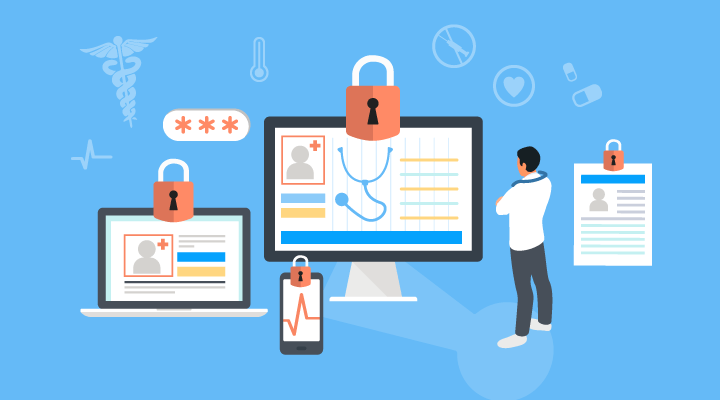
Regulatory frameworks such as HIPAA and GDPR define how identifiable information can be used, shared, or anonymized.
Key ethical requirements include:
- Institutional review board approval
- Data de-identification protocols
- Secure storage and access logs
- Justification for consent waivers
According to the U.S. Department of Health & Human Services, even coded datasets can pose re-identification risks if safeguards are weak.
Ethical transparency is now a publication criterion. Journals increasingly demand a data governance statement, not just a methods section.
Transforming Messy Records into Research-Grade Data
Hospital information systems prioritize speed, not consistency. Researchers must impose order.
Terminology inconsistencies alone can derail studies. Different clinicians may record the same condition differently. Standardization frameworks taught in resources like medical terminology for health professions 9th edition and acquiring medical language 3rd edition become essential tools.
Cleaning workflows typically include:
- Harmonizing diagnostic codes
- Resolving duplicate patient records
- Standardizing units and formats
- Validating timestamps
- Documenting missing data patterns
Hospitals using top rules-based medical claims editing engines often produce cleaner administrative datasets because billing accuracy demands standardized coding.
The National Institutes of Health recommends maintaining a detailed data dictionary so future researchers can replicate findings.
ClinicaPress methodology guidance (http://ClinicaPress.com/methodology) emphasizes that undocumented cleaning steps are a red flag during peer review.
Matching Study Design to Routine
Routine data is observational by nature. That means causality must be argued carefully.
| Study Design | When It Works Best | Key Risk |
| Retrospective cohort | Tracking treatment outcomes | Confounding |
| Case-control | Rare diseases | Selection bias |
| Cross-sectional | Prevalence studies | No temporal link |
| Interrupted time series | Policy evaluation | External influences |
Qualitative insights can also be extracted from narrative notes using data analysis techniques in qualitative research, revealing patterns in clinician decision-making.
ClinicaPress peer-review resources (http://ClinicaPress.com/peer-review) warn authors against overstating causal claims from observational datasets.
Advanced Analytics: Moving Beyond Descriptive Studies
Modern routine hospital data research increasingly uses advanced methods:
- Machine learning for risk prediction
- Natural language processing for clinical notes
- Survival analysis for long-term outcomes
- Propensity score matching to reduce bias
These tools can simulate aspects of randomized trials—but they cannot replace them.
Researchers must clearly explain assumptions, model limitations, and validation procedures. Transparency determines whether sophisticated analytics are seen as rigorous or as opaque data manipulation.
Guidelines from the International Committee of Medical Journal Editors stress reproducibility, especially for computational methods.
ClinicaPress editor training materials (http://ClinicaPress.com/editor-training) note that unclear analytical pipelines are a common reason for rejection.
Writing the Manuscript: Turning Analysis into Argument
Editors evaluate narrative logic as much as statistical accuracy.
A strong paper should:
- Define a precise research question
- Justify the dataset’s relevance
- Explain methodological choices
- Acknowledge limitations openly
- Discuss real-world implications
Routine data studies must explicitly address biases such as incomplete documentation and treatment variability.
According to the Wikipedia overview of real-world evidence, observational findings are most valuable when interpreted cautiously rather than presented as definitive proof.
ClinicaPress editorial standards (http://ClinicaPress.com/ethics) stress that credibility comes from restraint, not exaggerated claims.
Policy and Economic Implications
Routine hospital data research influences decisions far beyond academia
Governments and insurers rely on real-world evidence to determine:
- Reimbursement policies
- Public health interventions
- Hospital funding allocations
- Workforce planning
During emergencies, routine datasets often provide the fastest insight into emerging trends. Coverage from major outlets like BBC Health News has documented how hospital data guided crisis responses.
Economic analyses grounded in everyday clinical records reveal inefficiencies invisible in controlled environments—reinforcing the importance of routine data research for sustainable healthcare systems.
ClinicaPress policy analysis pages (http://ClinicaPress.com/policy) highlight how ethically analyzed hospital data can shape national reforms.
Frequent Pitfalls That Undermine Studies
Even large datasets cannot compensate for weak methodology.
Common failure points include:
- Undefined hypotheses
- Selective reporting of outcomes
- Ignoring missing data bias
- Overgeneralizing results
- Poor documentation of methods
“Data dredging” — searching for statistically significant patterns without theoretical grounding — remains a major concern.
Editors can distinguish exploratory analysis from confirmatory research. Transparency about which is which protects scientific integrity.
Hospitals as Continuous Learning Systems
The future of medicine depends on integrating research into routine care.
With interoperable records, standardized terminology, and ethical oversight, hospitals can evolve into real-time research platforms. Artificial intelligence will accelerate analysis, but governance must keep pace to prevent misuse.
Routine hospital data should no longer be treated as administrative residue. It is a living archive of clinical reality — one capable of generating the next generation of medical knowledge.