Understanding the Concept of a Research Paper
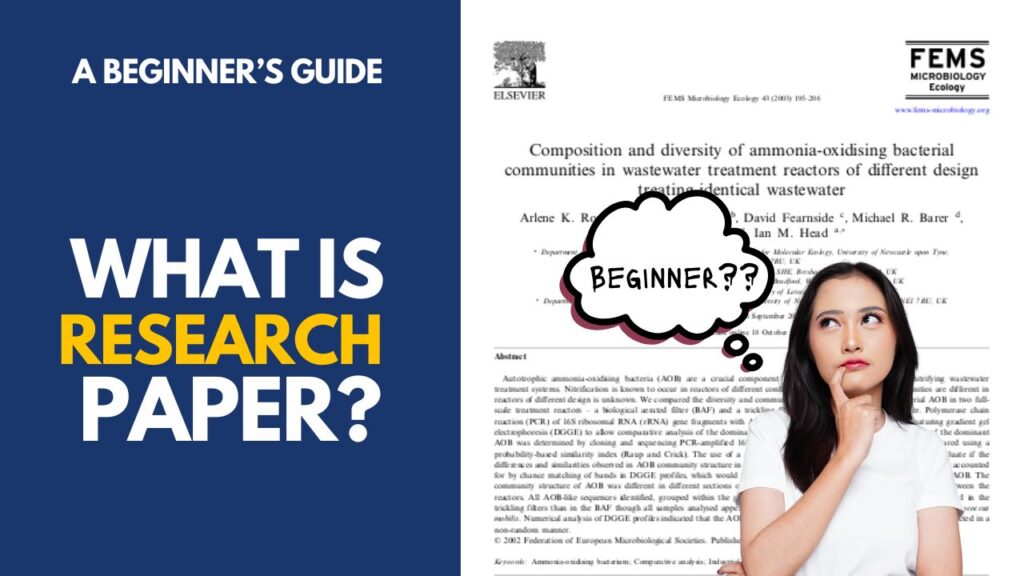
A research paper is more than just an essay — it’s a systematic and structured piece of academic writing designed to explore, analyze, and interpret facts about a specific topic. Whether in high school, college, or a professional setting, research papers serve as a way to present evidence-based arguments, insights, and discoveries.
At its core, a research paper demonstrates your ability to think critically, analyze information, and communicate findings clearly. It isn’t about summarizing someone else’s work — it’s about contributing your understanding and perspective to a larger academic conversation.
Definition and Purpose of a Research Paper
A research paper is a written document that explores a research question or hypothesis using reliable sources, data, and logical reasoning. Its primary purpose is to answer a specific question through investigation, analysis, and interpretation. Unlike a regular essay, it requires extensive background reading, detailed methodology, and credible citations.
For instance, a psychology student might write a research paper on “The Effects of Sleep Deprivation on Cognitive Performance.” This paper wouldn’t just state opinions; it would include studies, data, and comparisons drawn from existing literature.
The Role of Research Papers in Academic and Professional Fields
Research papers are the foundation of academic progress. In universities, they serve as proof of a student’s ability to conduct independent work. In professional fields like medicine, technology, or economics, research papers drive innovation and policy-making.
By publishing or presenting a research paper, scholars share new ideas, challenge outdated beliefs, and inspire future exploration — all while contributing to the collective knowledge of their field.
Types of Research Papers
Analytical Research Paper
This type of paper involves breaking down an issue into smaller parts to understand it better. The goal is not to persuade but to evaluate and interpret. Analytical research papers are common in disciplines like literature, history, and social sciences.
Argumentative Research Paper
An argumentative research paper, as the name suggests, takes a stance on a topic and uses evidence to defend it. These papers require strong reasoning, credible data, and logical flow.
Experimental and Survey-Based Research Papers
These are widely used in science and psychology. They involve conducting experiments or surveys, collecting data, and interpreting results based on evidence.
Compare-and-Contrast Research Papers
This type examines two or more subjects to highlight their similarities and differences. It’s often used in cultural studies, linguistics, and sociology.
Key Components of a Research Paper
A successful research paper follows a structured format. Below are its essential components:
Title Page and Abstract
The title page introduces your paper’s topic, author name, institution, and date. The abstract summarizes your study — usually in 150–250 words — outlining the purpose, methods, and main findings.
Introduction and Thesis Statement
The introduction provides background information and context, while the thesis statement clearly defines your central argument or question.
Methodology and Data Collection
This section details how you gathered information — whether through surveys, lab experiments, or literature analysis. Transparency in this section ensures your work is credible and reproducible.
Discussion, Conclusion, and References
The discussion interprets your results and links them back to your hypothesis. The conclusion wraps up your findings, and the references list acknowledges all sources used.
The Research Process Explained
Writing a research paper involves several distinct stages.
Choosing a Topic and Formulating a Question
Pick a subject that interests you and has enough resources available. Then, narrow it down into a focused research question.
Conducting a Literature Review
Before you start writing, review existing studies to understand what’s already known. This helps you identify gaps your paper can fill.
Collecting and Analyzing Data
Depending on your topic, you may collect primary data (surveys, experiments) or secondary data (books, articles). Analyze the data logically and link it to your research question.
Writing and Editing the Final Draft
Once all sections are ready, draft your paper and edit it thoroughly for clarity, coherence, and citation accuracy.
Common Mistakes to Avoid When Writing a Research Paper
- Plagiarism and Citation Errors: Always cite your sources correctly to avoid academic misconduct.
- Weak Thesis or Poor Structure: Make sure your thesis is specific and every section supports it.
- Lack of Credible Sources: Use peer-reviewed journals and official publications instead of random websites.
Tools and Resources to Improve Your Research Paper
- Online Databases: Google Scholar, JSTOR, and PubMed are great for academic sources.
- Grammar and Plagiarism Checkers: Tools like Grammarly and Turnitin enhance accuracy.
- AI Writing Assistants: ChatGPT and reference managers like Zotero simplify writing and organization.
(External Resource: Learn more about research paper writing techniques on Purdue OWL.)
How to Format and Cite a Research Paper Correctly
Understanding citation styles is crucial.
APA, MLA, and Chicago Styles Explained
- APA: Used in psychology and sciences.
- MLA: Common in humanities.
- Chicago: Preferred in history and fine arts.
Tips for Proper In-Text Citations and References
Always follow the rules of your chosen style, including author-date formatting, italics for titles, and hanging indents for references.
Benefits of Writing a Research Paper
- Enhances critical thinking and analytical skills.
- Builds subject mastery and credibility.
- Improves academic and communication skills.
- Opens doors to publishing and career opportunities.
Frequently Asked Questions (FAQs)
Q1: What makes a good research paper?
A well-defined thesis, credible sources, and clear structure make a strong research paper.
Q2: How long should a research paper be?
It typically ranges between 5–20 pages depending on the academic level.
Q3: Can I use AI tools to help write my research paper?
Yes, AI can assist with grammar, citations, and structure — but always verify and edit manually.
Q4: What’s the hardest part of writing a research paper?
Finding a unique research question and maintaining academic tone.
Q5: How do I avoid plagiarism?
Always paraphrase properly and cite every source used.
Q6: Do I need an abstract for every research paper?
Most academic papers require an abstract, especially at the college and professional level.
Conclusion
Writing a research paper may seem intimidating, but it’s one of the most rewarding academic experiences. It teaches you how to explore topics deeply, think critically, and present ideas with authority. By following a clear structure, using reliable sources, and avoiding common mistakes, you can craft a paper that stands out — one that reflects both your intellect and integrity.
👉 Ready to publish your research paper?
Let’s make your work stand out in the academic world.
📩 Contact us today to get expert assistance in research paper writing and publishing.