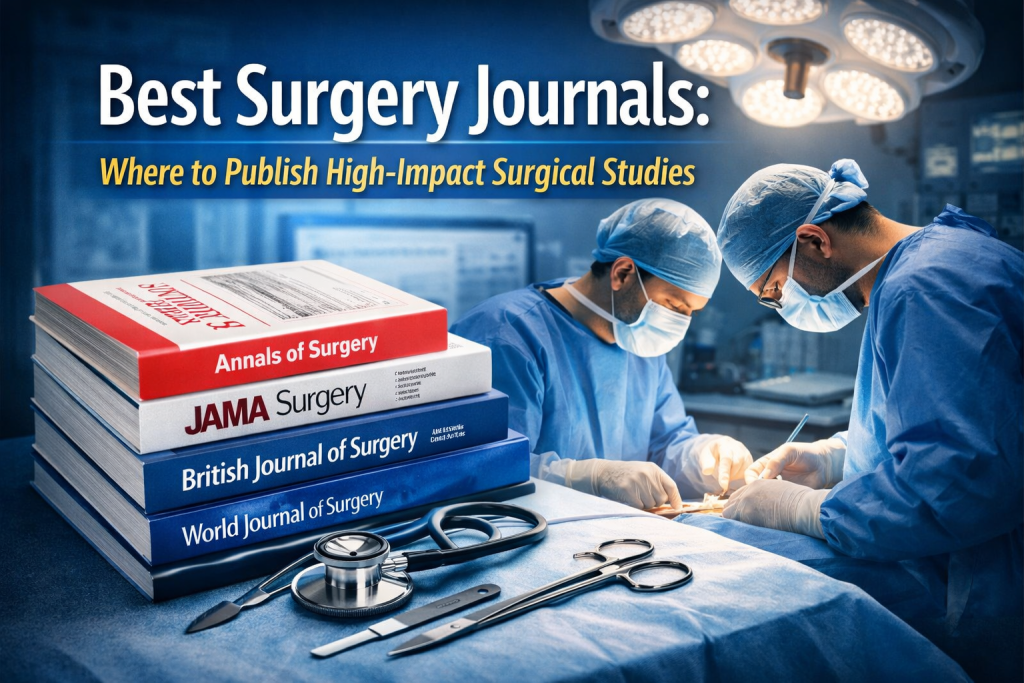
Publishing in top-tier surgical journals is not just an academic milestone — it directly shapes clinical practice, policy, and patient outcomes. If your research cannot reach the surgeons who actually operate, it has limited real-world value. That’s why choosing from the best surgery journals is a strategic decision, not a prestige game.
This guide cuts through the noise and shows where serious surgical research belongs — especially for trainees in core surgical training, members of a surgical team, and clinicians aiming for leadership roles in the surgical field.
Why Journal Selection Matters More Than Ever
Surgical science moves fast. Techniques evolve, safety standards tighten, and evidence thresholds rise. Publishing in the wrong journal can bury impactful findings.
High-impact surgical journals offer:
- Rigorous peer review that strengthens your methodology
- Global readership among decision-makers
- Policy influence on training and safety standards
- Higher citation potential
According to the World Health Organization, surgical care is essential to universal health coverage, making credible dissemination channels critical for improving outcomes worldwide (see WHO surgical systems overview on https://www.who.int).
Early-career researchers often underestimate how journal choice affects funding prospects, fellowship applications, and leadership opportunities within the fleet surgical team structure of major hospitals.
The Gold Standard: Top-Tier General Surgery Journals
These journals define the field. If your study could change practice guidelines, start here.
1. Annals of Surgery
The benchmark journal for surgical innovation and outcomes research.
Strengths:
- High impact factor
- Practice-changing clinical trials
- Global authorship
It frequently publishes studies influencing perioperative safety standards referenced by organizations like the Centers for Disease Control and Prevention (CDC surgical site infection guidance on https://www.cdc.gov).
2. JAMA Surgery
Part of the JAMA Network, known for strict editorial standards and clinical relevance.
Best for:
- Health systems research
- Surgical education
- Policy-driven studies
Major medical journalism outlets such as BBC News often report findings from JAMA journals, amplifying public impact (BBC health coverage on https://www.bbc.com/news/health).
3. British Journal of Surgery
Highly respected across Europe and Commonwealth countries, especially valuable for trainees pursuing core surgical training pathways.
It frequently addresses workforce planning, training quality, and outcomes — topics central to surgical career progression.
Specialty Surgery Journals That Dominate Their Fields
If your research is niche, specialty journals may deliver higher relevance and citations.
Cardiothoracic Surgery
- Journal of Thoracic and Cardiovascular Surgery
- European Journal of Cardio-Thoracic Surgery
Neurosurgery
- Journal of Neurosurgery
- Neurosurgery
Orthopedics
- Journal of Bone and Joint Surgery
Specialty journals often reach the exact surgical team members implementing new techniques — anesthetists, scrub nurses, and subspecialist surgeons.
For example, ClinicaPress recently analyzed publication strategies in subspecialties in its article on surgical figure standards (http://ClinicaPress.com/poor-quality-figures), showing how visual data quality affects acceptance rates.
Emerging Journals and Open Access Platforms
Open access is reshaping surgical publishing. Visibility now competes with prestige.
Leading open access surgery journals:
- BJS Open
- World Journal of Surgery
- International Journal of Surgery
These journals accelerate dissemination — crucial during public health emergencies.
A review on surgical system resilience highlighted on Wikipedia’s surgical research page (https://en.wikipedia.org/wiki/Surgery) shows how open access studies influenced pandemic-era operating protocols.
ClinicaPress also discussed ethical open access publishing models in its guide to responsible authorship (http://ClinicaPress.com/ethical-authorship).
How Trainees Should Choose Journals Strategically
If you’re in core surgical training, your publication strategy should align with career goals.
For Academic Careers
Aim high — even if rejection risk is high.
For Clinical Career Progression
Prioritize journals recognized by training bodies and hiring committees.
For Policy Influence
Target journals read by healthcare administrators.
A ClinicaPress feature on surgical career pathways (http://ClinicaPress.com/surgical-career-pathways) explains how publications influence consultant appointments.
Acceptance Factors Editors Actually Care About
Forget myths about institutional prestige. Editors focus on:
- Methodological rigor
- Ethical compliance
- Statistical validity
- Clinical relevance
A strong paper answering a real surgical problem beats a flashy but impractical study.
Common rejection reasons:
- Poor study design
- Inadequate sample size
- Weak discussion
- Lack of novelty
ClinicaPress highlighted these pitfalls in its analysis of manuscript rejections (http://ClinicaPress.com/why-manuscripts-get-rejected).
Comparison of Leading Surgery Journals
| Journal | Best For | Impact Level | Acceptance Difficulty |
| Annals of Surgery | Landmark clinical trials | Very High | Extreme |
| JAMA Surgery | Policy & outcomes | Very High | Extreme |
| British Journal of Surgery | Training & global practice | High | Very High |
| World Journal of Surgery | International studies | Moderate | High |
| International Journal of Surgery | Rapid dissemination | Moderate | High |
Top journals share one trait: they publish research that changes how surgeons operate, not just what they read.
The Future of Surgical Publishing
Surgical journals are shifting toward:
- Data transparency requirements
- Pre-registration of trials
- AI-assisted peer review
- Global surgery equity research
The concept of a coordinated fleet surgical team — multidisciplinary units deployed for large-scale care delivery — is gaining attention in global surgery literature.
Funding agencies increasingly track publication venues when evaluating grant applications. Publishing in the best surgery journals signals credibility and leadership potential.
Final Takeaway
Choosing where to publish is a career-defining decision. The right journal amplifies your work, influences surgical practice, and positions you as a serious contributor to the field.
If your research can change what happens inside an operating room, it deserves a platform that surgeons actually read.