

Academic publishing is under pressure. Trust gaps. Peer review fatigue. Data manipulation scandals. Predatory journals. And a credibility crisis that refuses to fade.
Enter Blockchain in Academic Publishing — marketed as the ultimate transparency engine. Immutable records. Tamper-proof peer review. Verifiable authorship. Sounds revolutionary.
But is it truly the next infrastructure layer of science? Or just another buzzword floating through conference halls and blockchain convention center trade show booths?
Let’s dissect this properly.
The Problem Blockchain Claims to Solve
Academic publishing today relies on centralized systems. Editorial databases. Institutional repositories. Commercial journal platforms.
This model creates friction:
- Opaque peer review timelines
- Retraction delays (Read How Journals Reject Papers for Credibility in the Post-Retraction Era)
- Data manipulation risks
- Ghost authorship (Learn more from Ghost Authorship in Research Publishing: The Ethics Crisis Undermining Science)
- Duplicate submissions
Even mainstream outlets such as Nature have reported on systemic integrity concerns in peer review.
The deeper issue isn’t just fraud. It’s a trust architecture.
And that’s exactly where blockchain positions itself.
What Blockchain Actually Means in Publishing
Blockchain is a decentralized ledger. Every transaction is recorded, time-stamped, and cryptographically secured. Once written, it cannot be altered retroactively without network consensus.
Applied to publishing, this means:
- Manuscript submission timestamps become immutable
- Reviewer contributions become traceable
- Data sets can be hashed and verified
- Authorship disputes become evidence-based
According to the White House Office of Science and Technology Policy, research transparency is becoming a policy-level priority. Infrastructure will have to evolve.
Blockchain offers a structural solution — not cosmetic reform.
But structural shifts demand realism.
Peer Review on Chain: Transparent or Problematic?
The phrase “academic publishing news today peer review” increasingly intersects with blockchain pilots.
The idea is simple:
- Reviewers receive cryptographic IDs
- Reviews are logged permanently
- Revisions are tracked transparently
Some models even propose token incentives for reviewers — effectively rewarding peer review contributions.
Sounds empowering.
But here’s the friction:
- Academic culture values anonymity in many fields
- Public review trails may discourage critical feedback
- Universities are not yet equipped for decentralized ledger governance
Research integrity organizations such as the Committee on Publication Ethics (COPE) emphasize procedural safeguards — not technological shortcuts.
Blockchain can document integrity. It cannot replace ethical behavior.
Data Security: Beyond Buzzwords
One area where blockchain genuinely shows promise is lightweight blockchain-based cybersecurity.
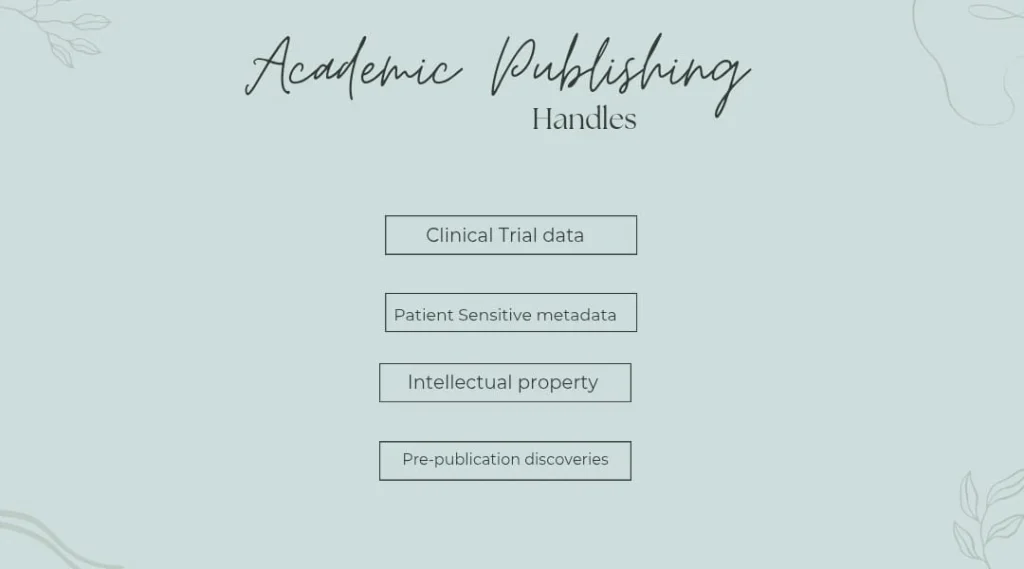
Traditional databases are hackable. Blockchain introduces distributed security layers.
A 2023 overview in PubMed Central explains how decentralized validation strengthens data integrity in research ecosystems.
However:
Blockchain does not eliminate cyber risk.
It redistributes it.
Institutions must still manage endpoint security, identity verification, and access control.
Security theatre is not security.
The Conference Hype Cycle
Walk into any blockchain convention center, trade show booth, blockchain-sponsored event backdrop ballroom, and you’ll see it:
- “Decentralizing Science” banners
- NFT-based publication models
- Tokenized citation metrics
- Crypto-incentivized review systems
But commercialization often outpaces peer validation.
Academic publishing is conservative for a reason. Its mission is epistemic stability — not technological thrill.
Our editorial team discussed this shift in our earlier analysis on AI Tools in Manuscript Screening and Peer Review, where we argued that innovation must pass reproducibility tests before integration.
Blockchain is currently in its pilot phase. Not standard phase.
Where Blockchain Actually Makes Sense
Let’s separate hype from practical integration.
Below is a realistic breakdown:
| Use Case | Feasibility (2025) | Benefit Level | Barriers |
| Timestamping manuscript submissions | High | Strong transparency | Platform integration costs |
| Reviewer contribution tracking | Moderate | Credit recognition | Cultural resistance |
| Data verification hashes | High | Strong integrity | Technical literacy gaps |
| Token-based citation rewards | Low | Speculative | Ethical concerns |
| Fully decentralized journals | Experimental | Unknown | Governance instability |
Blockchain works best as a layer, not a replacement.
Hybrid models — centralized editorial oversight + blockchain-backed verification — are more plausible.
This mirrors the publishing evolution discussed in our piece on The Future of Academic Publishing in the AI Era.
Revolutionary rhetoric rarely survives institutional review boards.
Academic Publishing News Today (October 2025): Where We Stand
As of academic publishing news today, in October 2025, major publishers are experimenting quietly — not radically.
No top-tier journal has migrated fully to blockchain infrastructure.
Instead, we see:
- Pilot transparency logs
- Blockchain-based data repositories
- Grant-tracking integrations
According to the World Health Organization News, global health research governance increasingly emphasizes traceability and open science standards.
Blockchain fits within that governance trend — but it is not leading it.
Policy frameworks drive change. Technology follows.
Risks We Should Not Ignore
Let’s be direct.
Blockchain is not inherently ethical.
Risks include:
- Energy consumption concerns
- Governance centralization disguised as decentralization
- Vendor monopolies rebranded as decentralized platforms
- Token speculation influencing citation ecosystems
Science cannot afford gamified credibility metrics.
We already struggle with impact factor distortions — as discussed in our editorial on Clinical Registration: Why Transparency Matters.
Replacing one flawed metric system with a crypto-flavored one would be regression, not progress.
Is Blockchain the Future Standard?
Short answer: Not yet.
Long answer: Possibly — but selectively.
For blockchain in academic publishing to become standard, five things must happen:
- Global interoperability standards
- Regulatory clarity
- Institutional adoption frameworks
- Ethical oversight mechanisms
- Cost-effective implementation models
Until then, it remains a powerful infrastructure experiment.
Not hype.
Not inevitability.
But conditional potential.
We explored similar structural debates in From Journal to Bedside: How Evidence Becomes Treatment, where we emphasized that system redesign in science requires policy alignment — not enthusiasm alone.
Blockchain will either mature into invisible infrastructure.
Or remain a stage prop in sponsored event ballrooms.
Science will decide.
Not marketing decks.