Academic medicine doesn’t reward effort—it rewards positioning. And right now, most early-career researchers are positioned in the wrong places.
They chase saturated domains, compete for limited novelty, and spend years waiting for one publication to land. Meanwhile, perioperative research medical journal publication sits in plain sight—rich in data, clinically relevant, and dramatically underutilized.
This isn’t just an overlooked niche. It’s a structural advantage.
Why Perioperative Research Is Systematically Undervalued
Perioperative care operates in a fragmented ecosystem. Surgeons focus on procedures, anesthesiologists on intraoperative stability, nurses on transitions, and administrators on efficiency. The result?
No single specialty fully owns the research space.
This fragmentation creates a consistent pattern:
- High clinical volume
- Low academic consolidation
- Minimal competition for publication
Learn about the Top 10 Ethical Academic Journals That Follow COPE, ICMJE, and WHO Publishing Standards
According to global surgical safety frameworks, perioperative practices directly influence patient outcomes at scale. Yet the academic output does not match its real-world impact.
That mismatch is your entry point.
The True Scope of Perioperative Medicine
Most people misunderstand perioperative medicine. They reduce it to “around surgery,” when in reality, it is a continuous clinical system.
It includes:
- Preoperative optimization (risk stratification, comorbidity management)
- Intraoperative decision-making (anesthesia, monitoring, interventions)
- Postoperative recovery (pain control, complications, discharge planning)
Each phase generates distinct, measurable variables. That means one patient journey can produce multiple independent research questions.
This is what makes perioperative research scalable. You’re not limited to one dataset—you’re sitting on a pipeline.
For researchers targeting a fast publication medical journal, this scalability translates into consistent output rather than one-off studies.
Also, explore Data Sharing Mandates in Clinical Research — Compliance vs Confidentiality.
Why Perioperative Services Offer High-Impact Data
The term perioperative services often gets used operationally, but from a research perspective, it’s a goldmine of structured processes.
Think about what happens daily in any surgical center:
- Dozens of patients move through standardized workflows
- Each step is documented
- Deviations are recorded
- Outcomes are measurable
That’s not just clinical work. That’s ready-made research infrastructure.
Key Data Advantages:
- Repetition: High case volume enables large sample sizes
- Standardization: Protocol-driven care reduces variability
- Traceability: Every step is logged, audited, and reviewable
Compare that to experimental research, where data collection itself is a barrier. In perioperative settings, data already exists—you just need to structure it.
High-Yield Research Areas You Should Be Targeting
Perioperative research becomes powerful when it’s specific. Broad themes don’t get published—focused questions do.
1. Surgical Safety and Compliance Audits
Simple, structured audits evaluating checklist adherence can produce publishable results quickly.
Example:
- Compliance rates before and after intervention
- Correlation with complication reduction
2. Postoperative Complication Trends
Complications are not just clinical events—they’re research endpoints.
Focus areas:
- Surgical site infections
- Respiratory complications
- Postoperative delirium
3. Anesthesia and Intraoperative Stability
Small fluctuations in intraoperative parameters often go unanalyzed—but they matter.
Potential topics:
- Blood pressure variability and outcomes
- Anesthetic technique comparisons
4. Workflow Inefficiencies
Operating room delays are measurable, repeatable, and fixable.
Research angles:
- Causes of delayed surgical starts
- Impact of scheduling inefficiencies
5. Enhanced Recovery Protocols
ERAS pathways are globally recognized but inconsistently implemented.
That inconsistency creates research opportunities:
- Compliance vs outcomes
- Departmental variation analysis
The Human Factor: Your Biggest Research Asset
Data doesn’t generate insight—people do.
The perioperative environment is inherently multidisciplinary, and that’s a competitive advantage if used correctly.
Perioperative Nursing
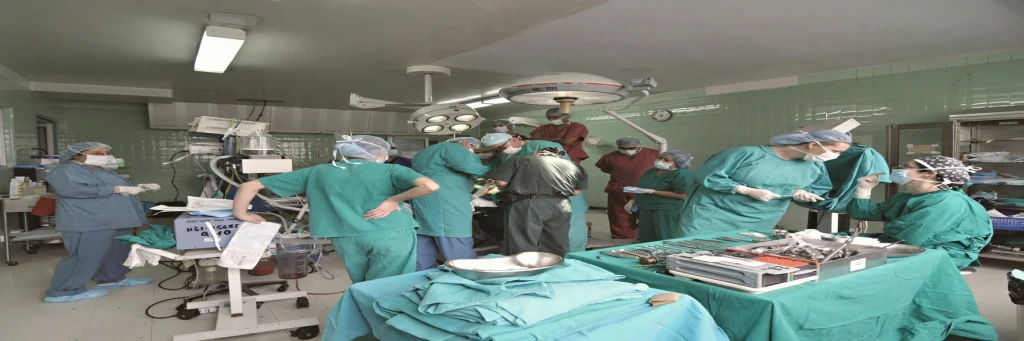
Perioperative nursing professionals are often the first to identify complications, delays, and protocol deviations. Their documentation is detailed, continuous, and clinically grounded.
Ignoring nursing input is a research blind spot.
Perioperative Assistant
A perioperative assistant operates at the intersection of workflow and execution. They observe inefficiencies that senior clinicians often overlook.
This includes:
- Instrument delays
- Setup inconsistencies
- Communication breakdowns
These observations translate directly into operational research topics.
Clinicians (Surgeons & Anesthesiologists)
While clinicians drive decision-making, they often focus on outcomes rather than processes. Combining their expertise with system-level observations creates stronger, more publishable studies.
As highlighted in patient safety discussions on PSNET, interdisciplinary research consistently produces more actionable findings.
Why Perioperative Research Accelerates Publication Speed
Let’s remove the illusion: speed matters in academic progression.
Perioperative research offers structural advantages that directly impact publication timelines.
| Factor | Traditional Clinical Research | Perioperative Research |
| Data collection (Read Presenting Clinical Data: Tables, Figures, and Supplementary Files Done Right) | Prospective, time-consuming | Often retrospective |
| Sample size | Hard to achieve | Naturally large |
| Ethical complexity | High | Moderate (audit-based) |
| Study design | Rigid | Flexible |
| Turnaround time | Slow | Faster |
This is why perioperative studies are ideal for researchers targeting a fast publication medical journal.
If you’re building a portfolio, not just a single paper, this efficiency compounds over time.
Common Mistakes That Undermine Perioperative Papers
Access to data does not guarantee publication. Most failures happen at the design and writing stages.
1. Treating Audits as Informal Exercises
An audit without a defined methodology is not publishable research.
2. Vague Outcome Measures
Terms like “improved care” or “better outcomes” are meaningless without quantification.
3. Ignoring Statistical Analysis
Even simple datasets require structured analysis. Lack of statistical rigor is a common rejection reason.
4. Weak Manuscript Structure
Good data fails when presented poorly.
If structuring is your bottleneck, this guide provides a clear framework: How to Write an Effective Research Abstract (A Complete Guide for Students and Researchers).
Ethical Standards: Speed Without Compromise
There’s a misconception that faster research equals lower ethical standards. That’s false—and dangerous.
Perioperative research must still adhere to:
- Institutional approvals
- Patient confidentiality
- Transparent reporting
Ethical frameworks such as the Declaration of Helsinki apply regardless of study complexity.
Cutting ethical corners doesn’t just risk rejection—it damages long-term credibility.
Turning Routine Clinical Work Into Publications
The biggest barrier isn’t access—it’s mindset.
Most clinicians see routine work as “just clinical.” Researchers see it as structured data.
A Practical Framework:
- Identify repetitive processes
- Track deviations or inefficiencies
- Define measurable outcomes
- Collect data consistently
- Analyze trends
That’s your study.
Examples:
- Frequency and causes of surgical delays
- Postoperative pain management effectiveness
- Infection rates across different surgical units
Each example can evolve into a standalone publication.
Publication Strategy: Playing the Long Game
Perioperative research is not just about individual papers—it’s about building a pipeline.
Smart Strategy Includes:
- Breaking large datasets into multiple focused studies
- Publishing audits followed by interventional studies
- Collaborating across departments for broader datasets
Instead of one “perfect” paper, aim for:
- Consistent output
- Thematic coherence
- Progressive complexity
This approach strengthens both your CV and your academic identity.
For journal targeting and submission strategies, refer to: ClinicaPress Journal.
The Competitive Advantage You’re Ignoring
Most researchers follow trends. That’s why competition is highest in visible fields.
Perioperative research offers the opposite:
- Lower competition
- High clinical relevance
- Strong acceptance potential
Healthcare systems worldwide continue to highlight inefficiencies in surgical pathways, as frequently reported in global health coverage.
That means your research isn’t just publishable—it’s needed.
Final Insight: Stop Competing—Start Positioning
Academic success isn’t about working harder. It’s about working where others aren’t looking.
Perioperative research provides:
- Continuous, accessible data
- Multidisciplinary collaboration
- Faster publication cycles
- Real-world clinical impact
It’s not a trend-driven field. It’s a system-driven opportunity.
And systems outperform trends every time.
If your goal is perioperative research medical journal publication, you’re not entering a crowded arena—you’re stepping into an underutilized one with structural advantages.
Use it strategically, and it won’t just give you publications—it will give you momentum.