

Clinical researchers often assume publication decisions depend mostly on novelty, writing quality, or journal prestige. Those factors matter—but they are secondary. The real gatekeeper is your evidence.
A manuscript can be beautifully written and still fail if the dataset behind it is unstable, incomplete, biased, underpowered, or poorly documented. Editors know this. Reviewers know this. Increasingly, readers know this too.
That is why understanding the strength of clinical data before submission is one of the smartest moves any author can make.
Whether you are a hospital investigator, postgraduate researcher, CRO team member, physician-author, or independent scholar, this guide explains how to judge if your dataset is strong enough for peer-reviewed publication—and what to do if it is not.
Why Strong Clinical Data Matters More Than Ever
Modern journals operate in a stricter environment than they did a decade ago.
Editors now face:
- Reproducibility concerns
- Rising submissions globally
- Pressure to publish reliable science
- Reader demand for transparency
- Data manipulation scandals
- Increased use of reporting checklists
As a result, journals reject weak evidence faster than before.
This does not mean your study must be perfect. It means your data must be credible, coherent, and honestly presented.
Review this guide: Data Sharing Mandates in Clinical Research — Compliance vs Confidentiality.
Leading organizations such as the World Health Organization, the ICMJE, and the EQUATOR Network have all pushed standards that elevate methodological quality.
If your evidence is messy, vague, or unsupported, polished wording will not rescue it.
ClinicaPress helps researchers prepare manuscripts built on real scientific rigor through its clearly stated editorial policies and blogs.
What “Strength of Clinical Data” Actually Means
Many authors misunderstand the phrase.
They assume data strength means:
- Large sample size
- Many variables
- Advanced statistics
- Significant p-values
Not true.
The strength of clinical data is a composite of quality, relevance, transparency, and analytical fitness.
Core Dimensions of Strong Clinical Data
| Dimension | Meaning | Why It Matters |
| Accuracy | Correct records and valid entries | Prevents false findings |
| Completeness | Low missingness | Supports trust |
| Consistency | Uniform definitions and coding | Enables reliable comparison |
| Relevance | Variables answer the research question | Keeps study focused |
| Adequacy | Enough data for intended claims | Avoids overreach |
| Transparency | Clear methods and handling steps | Helps peer review |
| Ethics | Proper approval and consent | Mandatory |
| Reproducibility | Others can follow the workflow | Essential in science |
A skilled clinical data manager understands that database discipline matters as much as collection volume.
Ten thousand poor records can be weaker than five hundred excellent ones.
Start With the Most Important Question: Does the Data Match the Aim?
Before statistics, before formatting, before submission—ask one question:
Does this dataset directly answer the research objective?
Many studies fail here.
Example of Misalignment
Research question:
Does intervention X reduce 30-day readmission?
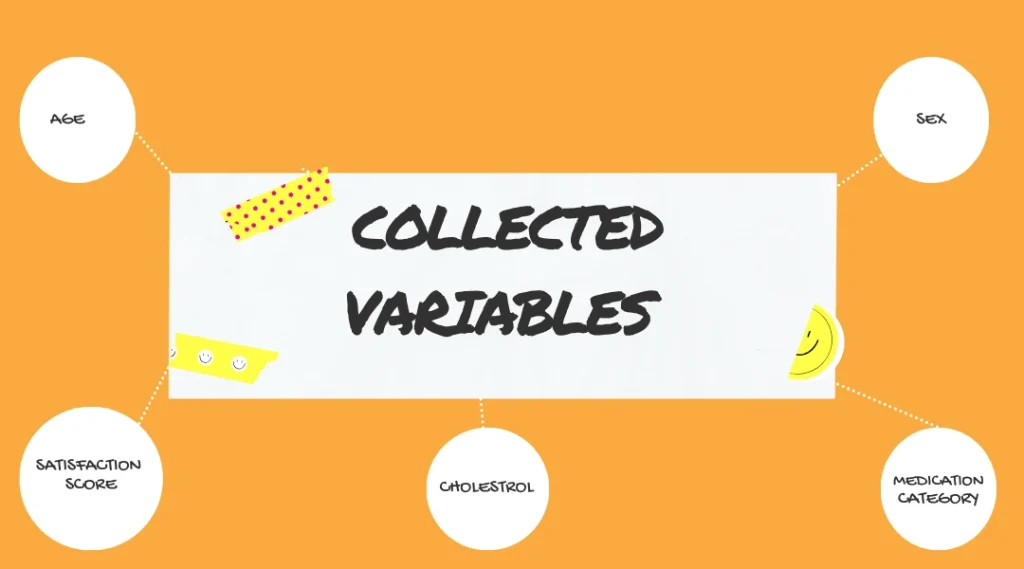
But no validated readmission data.
That is not a publication problem. That is a design problem.
Ask Yourself:
- Did we measure the primary outcome properly?
- Did we define exposure/intervention clearly?
- Did we capture baseline differences?
- Did we track enough follow-up time?
- Did we collect confounders?
- Are inclusion and exclusion criteria documented?
A sharp clinical data analyst begins with variable-objective alignment—not software output.
Authors often use pre-submission review support from platforms like Paperdit to catch these issues early.
Data Quality: What Reviewers Notice Instantly
Peer reviewers may never open your raw spreadsheet, but they detect weak data through patterns inside the manuscript.
Common Red Flags
- Different sample sizes in different tables
- Percentages that do not total correctly
- Impossible age ranges
- Missing baseline values without explanation
- Duplicated participants
- Contradictory methods and results sections
- Suspiciously perfect significance patterns
- Unclear exclusions
These signs signal one thing: lack of control.
A clinical data abstractor or data operations specialist often helps transform fragmented records into standardized datasets before analysis.
Internal Data Quality Checklist
Run this before submission:
- Range checks completed
- Duplicate records removed
- Units standardized
- Dates validated
- Variable labels cleaned
- Missingness reviewed
- Outliers assessed
- Final dataset version locked
If you have not done these basics, the manuscript is not ready.
Sample Size: Bigger Is Helpful, But Not Magical
Sample size matters—but context matters more.
A small, well-designed study can be published. A giant biased dataset can fail.
What Reviewers Ask
- Was sample size justified?
- Was a power calculation used?
- Was recruitment consecutive or selective?
- Is loss to follow-up high?
- Are subgroup analyses underpowered?
- Are the claims too broad for the sample?
A clinical data scientist may use sophisticated models, but no algorithm can fix a fundamentally weak sample.
Example
You study mortality predictors with only 14 events and run a 12-variable regression model.
That looks technical. It is statistically unstable.
If Sample Size Is Limited
Do this instead:
- Narrow conclusions
- Emphasize the exploratory nature
- Report confidence intervals
- Avoid causal language
- State limitations directly
Honest, modest science gets more respect than inflate dweak science.
Missing Data: The Silent Threat to Credibility
Missing data is normal in clinical research.
Hidden, ignored, or mishandled missing data is not.
You Need to Know:
- What proportion of data is missing?
- Which variables are affected?
- Is missingness random or systematic?
- Did one treatment arm lose more follow-up?
- Were records excluded or imputed?
- Did missingness affect outcomes?
A clinical data specialist treats missing data as a scientific issue, not a cosmetic inconvenience.
Why It Matters
Imagine worse patients skip follow-up visits. If you remove them from analysis, your outcomes may look falsely strong.
That can destroy trust during peer review.
Good Practice
- Report missingness clearly
- Explathe in the handling method
- Use sensitivity analyses when appropriate
- Avoid hiding denominator changes
This is central in data management for clinical research across hospitals, registries, and multicenter studies.
Are Your Variables Clean and Usable?
Many datasets are technically large but practically unusable.
Signs of Poor Variable Structure
- “Yes/No” coded as Yes, yes, Y, 1, TRUE
- Weight in kg for some patients, lbs for others
- Mixed date formats
- Ambiguous categories like “other” are used excessively
- No codebook
- No unit definitions
These problems create analysis errors and manuscript confusion.
Strong Variable Governance Includes:
- Standard naming conventions
- Single coding system
- Unit harmonization
- Clear category labels
- Dictionary of variables
- Version history
This is where modern clinical data management solutions create serious value.
Good analysis begins long before SPSS, R, SAS, or Python.
Learn more from Best Statistical Software for Medical Research: SPSS vs R vs Python
Statistics Must Fit the Data—Not Impress the Reader
One of the most common rejection triggers is methodological overperformance.
Authors use advanced tests because they sound impressive, not because they fit the dataset.
Common Errors
- Parametric tests on severely skewed data
- Multiple comparisons without adjustment
- Causal wording from cross-sectional studies
- Regression with too few events
- Ignoring cluster effects in multicenter studies
- Reporting only p-values without effect sizes
- No confidence intervals
A reliable clinical data analyst often simplifies rather than complicates.
Reviewers Prefer:
- Correct methods
- Clear assumptions
- Transparent reporting
- Clinically meaningful effect estimates
Fancy but flawed statistics are easy to reject.
Reproducibility: Can Another Team Follow What You Did?
Science depends on traceability.
If another competent team cannot understand how your results were produced, your findings weaken instantly.
Ask These Questions
Can readers identify:
- Participant selection method?
- Inclusion and exclusion logic?
- Data cleaning rules?
- Outcome definitions?
- Statistical software and version?
- Adjusted covariates?
- Sensitivity analyses?
If the answer is unclear, reviewers may question rigor.
Strong Reproducibility Assets
- Data dictionary
- Analysis plan
- Workflow notes
- Variable derivation logic
- Version-controlled scripts
- Participant flowchart
This is why many clinical data services now include governance and audit trails, not just data entry.
The NIH and broader open-science ecosystem continue to reward transparent workflows.
Multi-Site Studies Need Extra Discipline
If your study combines data from several hospitals, centers, or countries, complexity increases sharply.
Risks in Multi-Site Data
- Different lab reference ranges
- Different coding systems
- Different outcome definitions
- Different follow-up intensity
- Duplicate patients across sites
- Local practice variation
Without proper clinical trial data integration, your pooled dataset may create noise disguised as scale.
Essential Steps
- Harmonize variables before analysis
- Standardize definitions centrally
- Adjust for site effects when needed
- Audit site-level completeness
- Document integration logic
Large multi-site data can be powerful—but only when unified properly.
Use Reporting Guidelines Before Submission
Many authors check reporting standards too late.
Use them while preparing the manuscript.
Major Guidelines
- CONSORT – randomized trials
- STROBE – observational studies
- PRISMA – systematic reviews
- CARE – case reports
- TREND – nonrandomized interventions
- RECORD – routinely collected health data
These are widely accessible through the EQUATOR Network.
A good manuscript with weak reporting looks weaker than it is.
A strong dataset with poor reporting still risks rejection.
Journal Readiness Scorecard
Use this internal screening tool.
| Question | Yes | No |
| Primary outcome clearly measured? | ☐ | ☐ |
| Sample rationale defensible? | ☐ | ☐ |
| Missing data explained? | ☐ | ☐ |
| Variables standardized? | ☐ | ☐ |
| Statistics appropriate? | ☐ | ☐ |
| Ethics approval documented? | ☐ | ☐ |
| Tables internally consistent? | ☐ | ☐ |
| Methods reproducible? | ☐ | ☐ |
| Conclusions proportional to evidence? | ☐ | ☐ |
Interpretation
- 8–9 Yes: Strong submission candidate
- 6–7 Yes: Revise before submission
- 4–5 Yes: Significant risk
- 0–3 Yes: Not ready
Use honesty here. Optimism does not survive peer review.
Why Good Data Still Gets Rejected
Sometimes the science is solid, but the presentation damages perception.
Frequent Causes
- Weak title and abstract
- Unclear novelty statement
- Poor table formatting
- Inconsistent terminology
- Grammar that obscures meaning
- Oversold conclusions
- Wrong journal choice
- Weak cover letter
Strong data deserves professional packaging.
That is why many authors use publication-prep assistance to convert technical strength into submission strength.
If Your Data Is Not Strong Enough Yet
Do not panic. Do not rush the submission either.
Strengthen the Evidence
- Extend the recruitment period
- Complete missing records
- Improve endpoint definitions
- Re-run quality checks
- Add clinically relevant covariates
- Validate suspicious outliers
- Reduce unsupported subgroup claims
Reposition the Manuscript Honestly
Not every study must be definitive.
Your project may fit better as:
- Pilot study
- Feasibility study
- Quality improvement report
- Registry snapshot
- Real-world observational brief report
- Hypothesis-generating analysis
That is smarter than pretending preliminary evidence is conclusive.
The Role of Clinical Data Professionals
Many publication failures happen because researchers expect one person to do everything.
Strong outputs usually involve specialists.
Who Adds Value?
- Clinical data manager – database quality, integrity, structure
- Clinical data analyst – valid statistical interpretation
- Clinical data abstractor – accurate record extraction
- Clinical data specialist – consistency and governance
- Clinical data scientist – advanced modeling where appropriate
Even authors applying for clinical data analyst jobs or research operations roles should understand that publication-grade evidence requires systems thinking, not spreadsheet luck.
Direct Questions to Ask Before Submission
Use these blunt questions internally:
- If I were Reviewer #2, what would I attack first?
- Are any results too perfect to be believable?
- Can I defend every denominator?
- Are conclusions larger than evidence?
- Would an independent analyst reach similar findings?
- Is the manuscript hiding a weakness—or explaining it honestly?
If those questions make you uncomfortable, good. That discomfort prevents rejection.
Final Verdict: When Is Clinical Data Strong Enough?
Your clinical data is strong enough for journal publication when it is:
- Relevant to a clear research question
- Accurate and systematically managed
- Complete enough for a valid inference
- Transparent about limitations
- Statistically appropriate
- Ethically collected
- Reproducible in method
- Honestly interpreted
That is the real meaning of the strength of clinical data.
Journals do not demand perfection.
They demand evidence they can trust.
If your dataset delivers trust, clarity, and discipline, you are ready to submit at Journal of Clinical Medicine & Translational Research (JCMTR).
If not, improve the science first. Then polish the manuscript.