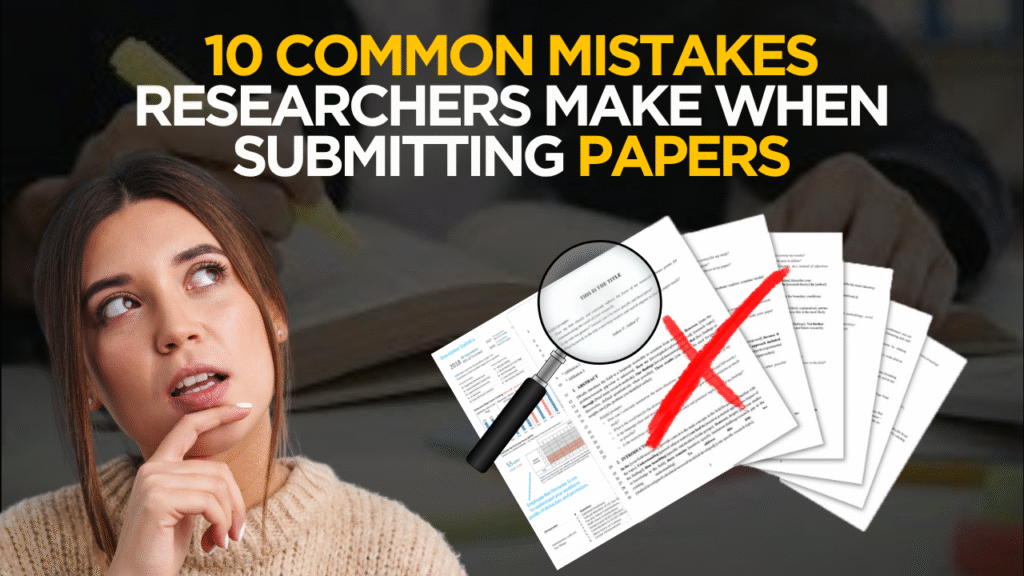
Submitting papers to journals is an exciting yet nerve-wracking stage of research. It’s the bridge between months—or even years—of hard work and global academic recognition. However, even brilliant research can face rejection if the submission isn’t executed properly.
Every academic journal follows a structured process that includes manuscript preparation, peer review, revisions, and publication. Researchers must ensure that their papers meet all technical, ethical, and formatting standards.
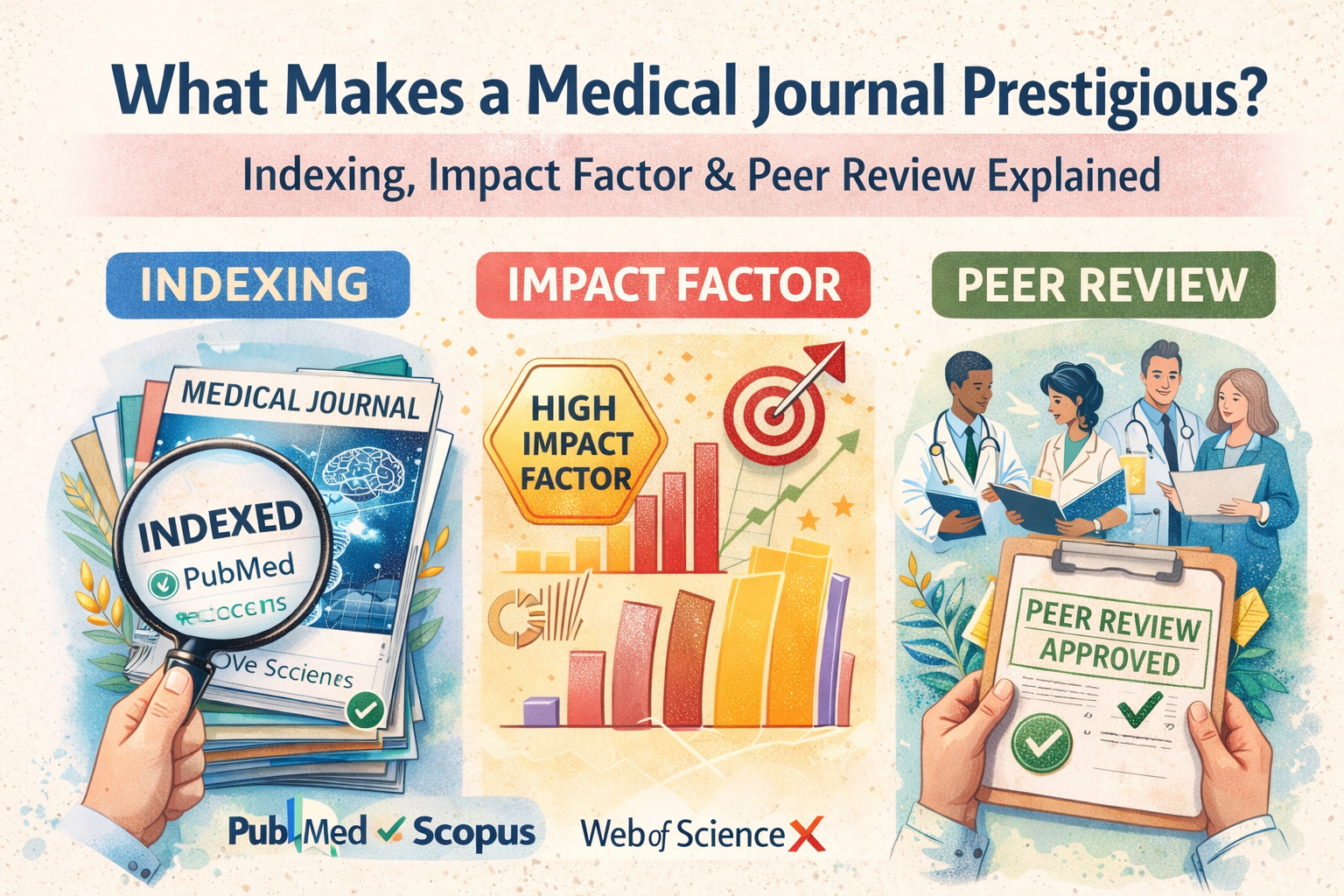
A key aspect of success lies in understanding the peer review system and aligning with editorial guidelines. Many researchers skip this vital step, assuming the science alone will speak for itself—but presentation and compliance are equally crucial.
Common Mistake #1: Ignoring Journal Scope
One of the top reasons for paper rejection is a mismatch between the manuscript and the journal’s scope. Every journal has a unique focus—some prioritize theoretical innovation, others applied research.
Before submitting, review the “Aims and Scope” section of the journal’s website. Submitting outside that scope signals to editors that you haven’t done due diligence, often resulting in immediate rejection.
✅ Tip: Always match your paper’s objectives and methodology to the journal’s audience and recent publications.
Common Mistake #2: Poorly Structured Abstract
The abstract is often the first (and sometimes only) part reviewers read before deciding whether your paper deserves full attention. A weak abstract filled with jargon or vague statements can sabotage a good study.
A compelling abstract should clearly outline:
- Purpose: Why was the research conducted?
- Method: How was it done?
- Results: What was discovered?
- Conclusion: What does it mean?
✅ Keep it concise—ideally between 150–250 words.
Common Mistake #3: Weak Literature Review
A literature review demonstrates your understanding of existing research. Neglecting to include recent or relevant studies can make your paper appear outdated or underinformed.
A strong literature review:
- Contextualizes your research within the field.
- Identifies knowledge gaps.
- Shows how your study contributes something new.
Always reference recent publications (within the last 5 years) and ensure citations are accurate and properly formatted.
Common Mistake #4: Lack of Originality or Novelty
Originality is the cornerstone of academic publishing. Reusing data, copying methods, or presenting known ideas as new can lead to plagiarism or redundant publication—serious ethical breaches.
✅ Use plagiarism checkers like Turnitin or iThenticate before submission to ensure your paper is 100% original.
Editors and reviewers appreciate innovative angles and creative problem-solving, even if the results are modest.
Common Mistake #5: Formatting and Citation Errors
Every journal specifies its preferred formatting and citation style (APA, MLA, Chicago, IEEE, etc.). Non-compliance, even in small details, can delay review or cause outright rejection.
🧾 Pro Tip: Use reference managers like Zotero or Mendeley to automate citation styles and updates.
Accurate referencing not only enhances readability but also demonstrates professionalism and respect for academic integrity.
Common Mistake #6: Ignoring Ethical Considerations
Ethics violations—such as data fabrication, lack of informed consent, or undisclosed conflicts of interest—are among the fastest ways to damage a researcher’s credibility.
Always adhere to institutional review board (IRB) standards and declare any funding sources or conflicts transparently. Ethical transparency strengthens your paper’s trustworthiness.
Common Mistake #7: Poor Grammar and Language Quality
Grammatical errors, awkward phrasing, or inconsistent terminology can distract reviewers and lower your paper’s perceived quality.
If English isn’t your first language, consider professional editing services or tools like Grammarly Premium or QuillBot. Clear, concise writing improves readability and comprehension.
Common Mistake #8: Incomplete or Incorrect Data Presentation
Data is the backbone of every research paper. Mislabelled tables, unclear figures, or incomplete datasets raise doubts about accuracy.
Ensure all graphs, charts, and tables have:
- Clear titles and legends
- Correct units and scales
- References in the text
✅ Always double-check for consistency between the results section and figures.
Common Mistake #9: Failing to Follow Submission Instructions
Every journal provides detailed submission guidelines. Ignoring these—such as file type, word limits, or figure resolution—can cause desk rejections before review even begins.
🔍 Always perform a “final checklist” review before uploading your paper.
Common Mistake #10: Lack of Response to Reviewer Feedback
Many researchers treat reviewer comments defensively. Instead, view them as opportunities to refine your work. A polite, detailed response document showing how you addressed each comment increases acceptance chances significantly.
How to Improve Your Research Paper Before Submission
Before hitting “Submit,” take time to polish your manuscript. Here’s how:
- Conduct a peer review swap with colleagues.
- Run grammar and plagiarism checks.
- Ensure all figures, tables, and appendices are labeled and cited.
- Check journal scope, format, and ethics requirements one last time.
Using Tools and Peer Review Assistance
Consider tools that streamline the research writing process:
- Overleaf: for collaborative LaTeX editing.
- Grammarly / LanguageTool: for language improvement.
- Turnitin / iThenticate: for originality checks.
Many journals also offer pre-submission editorial services—take advantage of them if possible.
FAQs About Submitting Research Papers
1. How long does the review process take after submitting a paper?
Usually between 4–12 weeks, depending on the journal and field.
2. Can I submit the same paper to multiple journals simultaneously?
No. Simultaneous submission violates most journals’ ethics policies.
3. Should I include unpublished data in my paper?
Only if it’s essential, well-documented, and ethically approved.
4. What happens if my paper is rejected?
Don’t worry—revise based on feedback and submit to another suitable journal.
5. Do I need professional proofreading before submission?
Highly recommended, especially for non-native English speakers.
6. How do I choose the right journal for my paper?
Match your paper’s theme, length, and scope with the journal’s recent publications.
Conclusion
Submitting papers is both an art and a discipline. Avoiding these common mistakes can dramatically improve your chances of acceptance and elevate your academic reputation. By paying attention to detail, following guidelines, and embracing reviewer feedback, your research can make the global impact it deserves.