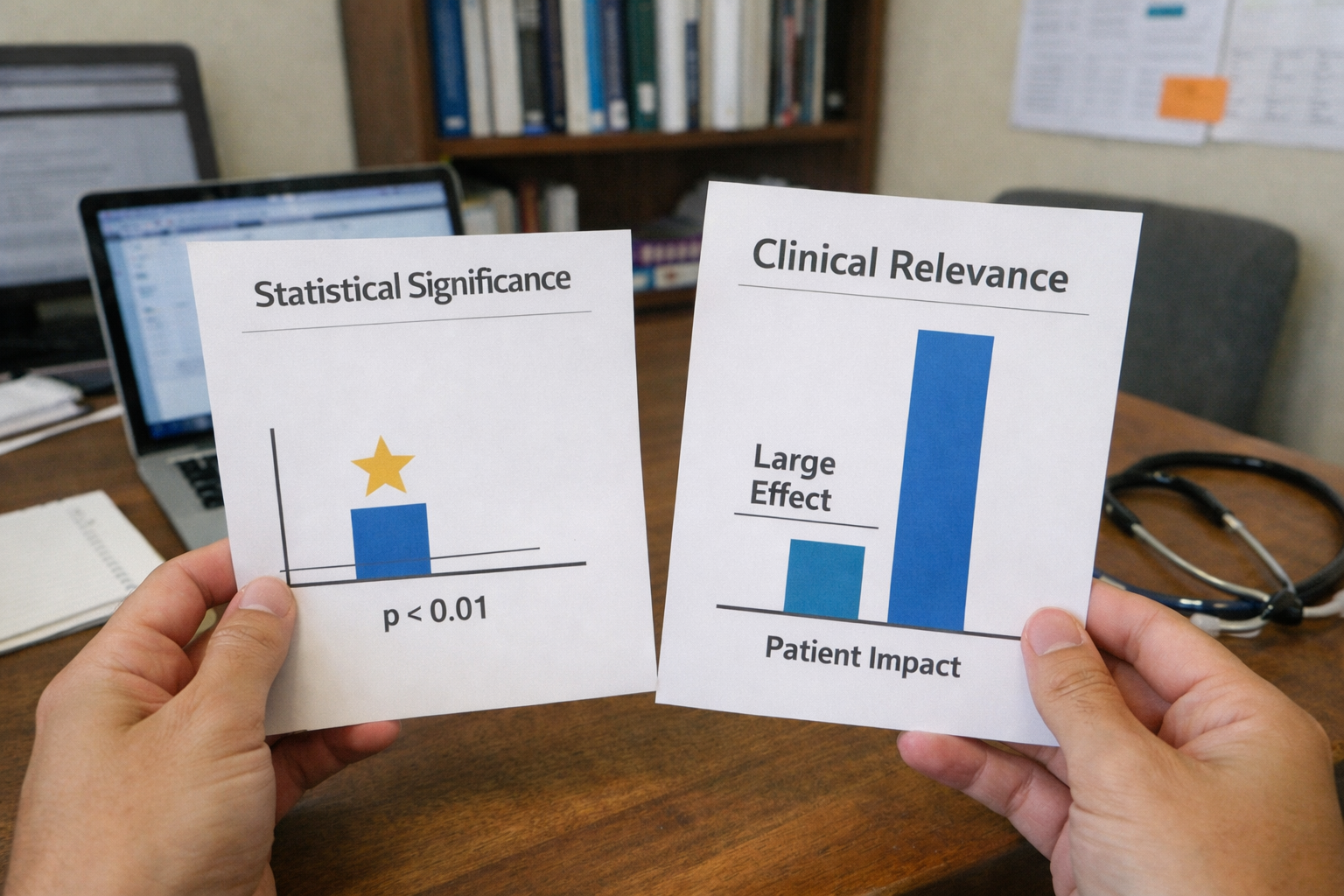

Clinical research used to live and die by citation counts. That era is over. Altmetrics in medicine now track how research travels across the real world — from policy documents and newsrooms to X threads, patient forums, and clinical guideline updates. If citations measure academic echo, altmetrics measure public pulse.
For clinicians, editors, and academic institutions, this shift is not cosmetic. It’s structural. Evidence that shapes practice often spreads long before it accumulates citations. Waiting years for citation indexes to validate relevance is clinically irresponsible when decisions are made daily.
What Altmetrics in Medicine Actually Measure
Altmetrics quantify digital attention to research outputs. Instead of counting how many scholars cite a paper, they track who is talking about it and where.
A typical altmetric score aggregates mentions from:
- News outlets
- Social media platforms
- Policy documents
- Clinical guidelines
- Wikipedia references
- Blogs and public commentary
This matters because clinical influence increasingly flows through non-academic channels. A randomized trial that triggers global guideline changes may influence patient care more than a heavily cited methodological paper.
According to World Health Organization discussions on evidence translation, the delay between publication and practice change can cost lives — making early attention signals valuable for public health surveillance.
Traditional metrics resemble a tape to measure academic reach — linear, slow, and narrow. Altmetrics function more like a live dashboard.
Why Citations Alone Fail Modern Medicine
Citation systems were built for print-era scholarship. Medicine now operates in a real-time information ecosystem.
Key limitations of citation-based evaluation:
1. Time lag
It can take 2–5 years for citations to accumulate meaningfully.
2. Academic tunnel vision
Citations reflect scholarly attention, not clinical uptake.
3. Policy blindness
Government reports and clinical guidelines rarely translate into citation spikes.
For example, rapid evidence syntheses during COVID-19 influenced treatment protocols worldwide long before citation databases caught up. Early dissemination mattered more than academic acknowledgment.
The U.S. National Institutes of Health emphasizes faster research translation into practice, noting that implementation delays undermine public health impact.
How the Altmetric Score Is Calculated
The altmetric score is not a popularity contest. Sources are weighted differently based on influence and credibility.
Typical weighting logic:
| Source Type | Relative Influence | Why It Matters |
| News media | High | Shapes public understanding |
| Policy documents | Very high | Direct clinical impact |
| Wikipedia citations | Moderate | Public knowledge integration |
| Social media | Variable | Rapid dissemination |
| Blogs | Low–moderate | Expert commentary |
Policy citations often outweigh thousands of tweets because they signal real-world application.
For editors deciding which papers deserve promotion, altmetrics reveal which studies resonate beyond academia. This aligns with concerns raised in Selective Reporting in Medicine about how visibility shapes perceived importance
Clinical Decision-Making and Real-Time Impact
Altmetrics are particularly valuable in fields where practice evolves quickly — infectious disease, oncology, emergency medicine, and pharmacovigilance.
Signals that a study is influencing care include:
- Inclusion in guideline drafts
- Discussion by major health agencies
- Coverage by major medical news outlets
- Uptake in continuing medical education
A clinician deciding whether to adopt a new intervention benefits from knowing whether a study is shaping discourse among peers, not just accumulating citations.
This is why many journals now display altmetric badges alongside articles — a practice discussed in Regional Journals vs International Journals — Impact on Clinical Practice.
The Role of Media, Public Engagement, and Policy

Medical research no longer speaks only to scientists. It speaks to policymakers, journalists, and patients.
When a study influences:
- National vaccination strategies
- Drug approvals
- Public health advisories
- Insurance coverage decisions
its impact transcends academia.
Wikipedia’s overview of altmetrics highlights their role in capturing broader societal influence beyond scholarly citation networks
However, attention does not equal quality. Sensational studies can generate noise without improving care. Editors must distinguish between visibility and validity, a theme explored in Altmetrics in Medicine — Measuring Impact Beyond Citations discussions across publishing forums.
Risks and Misinterpretations
Altmetrics introduce new biases.
Attention bias: Controversial topics attract disproportionate coverage.
Language bias: English-language studies dominate global discourse.
Platform bias: Research discussed on X may differ from what clinicians read.
There is also the risk of gaming — coordinated promotion campaigns can inflate visibility without scientific merit.
Ethical editorial practice requires contextual interpretation. As emphasized in discussions on academic editing standards in Paperedit’s guide on Types of Editing in Research Papers: Line vs Substantive vs Developmental, metrics should inform judgment, not replace it.
Tools, Citation Systems, and Research Infrastructure
Altmetrics complement — not replace — traditional citation tools such as an IEEE citation generator or an ACS citation generator. Proper referencing remains essential for academic integrity.
Institutions increasingly integrate altmetric data into research dashboards alongside outputs from citation processing centers and bibliometric analyses.
The future lies in hybrid evaluation systems that combine:
- Citations (scholarly influence)
- Altmetrics (societal attention)
- Implementation data (clinical adoption)
This layered approach mirrors how evidence actually moves through healthcare systems.
Why Altmetrics Matter for Authors and Journals
For researchers, altmetrics provide early feedback on whether work is reaching stakeholders who matter.
High altmetric attention often correlates with:
- Invitations to speak
- Policy consultation roles
- Collaborative opportunities
- Funding interest
For journals, it signals which topics resonate with practitioners. This insight can shape editorial priorities — especially in applied clinical publishing.
Wider visibility also increases the chance that research informs patient care, the ultimate purpose of medical science. As discussed in Legal Risks of Publishing Identifiable Clinical Images, visibility brings responsibility.
The Future: Measuring Meaningful Impact
Medicine is shifting from knowledge production to knowledge translation.
Future evaluation systems may track:
- Changes in prescribing patterns
- Hospital protocol updates
- Patient outcome improvements
- Public health indicators
Altmetrics are an early step toward measuring these outcomes.
A study that improves survival rates but garners modest citations is not low impact — it is clinically transformative. Metrics must reflect that reality.
Bottom Line
Altmetrics in medicine capture how research moves through society, not just academia. They reveal whether findings influence conversations, policies, and clinical decisions in real time.
Citations measure scholarly respect. Altmetrics measure societal relevance.
Medicine needs both — but when patient outcomes are at stake, waiting years for citations is a luxury healthcare cannot afford.