
The conversation around Big Data in Clinical Research isn’t about hype anymore—it’s about consequences. Since we’re generating more clinical data than ever before, publishing more papers than any generation in history, and yet, a brutal question hangs in the air:
Are medical journals actually being read—or just archived into oblivion?
This isn’t philosophical. It’s structural. And if you’re part of clinical research today—whether as a clinical research coordinator, researcher, or academic—this shift directly impacts how your work lives or dies.
The Explosion of Big Data in Clinical Research
With time, clinical research has entered a data-heavy era. As electronic health records, wearable devices, genomic sequencing, imaging technologies, and AI-driven diagnostics have created a constant flood of information.
And this is where big data services and big data analytics services come in—transforming raw datasets into patterns, predictions, and clinical insights.
But here’s the uncomfortable truth:
- Data generation is exponential
- Data interpretation is selective
- Data utilization is inconsistent
And journals?
They sit right in the middle of this imbalance.
According to insights from the National Institute of Health Sciences, biomedical data production is doubling at a pace that traditional publishing systems simply cannot keep up with. Consequently, there is a widening gap between what we know and what we actually use.
This gap is not just inefficiency—it’s lost clinical potential.
Medical Journals: From Knowledge Hubs to Data Warehouses?
Traditionally, journals were the final destination of research—the place where validated knowledge lived.
Today, they are increasingly becoming storage systems rather than active tools.
With the rise of medical journal databases, accessibility has improved dramatically. But accessibility does not equal engagement.
Let’s be direct:
- Thousands of articles are published every week
- Most are skimmed at best
- Many are never cited or applied
Hence, this creates a paradox: more publishing, less real-world impact.
Also, a detailed overview of Big Data Health Care on Wikipedia highlights how healthcare systems now prioritize real-time data processing over static publication formats.
In other words, clinicians are moving toward dashboards—not PDFs.
The Role of Big Data Analytics Services in Shaping Research Consumption
Big data isn’t just changing how research is conducted—it’s fundamentally reshaping how it is consumed.
Modern platforms powered by big data analytics services now:
- Recommend articles based on behavioral patterns
- Rank studies using engagement metrics
- Predict emerging research trends
- Filter out low-impact publications automatically
This means traditional journals are no longer gatekeepers of visibility—algorithms are.
If your research is not structured in a way that aligns with these systems, it risks being buried regardless of its quality.
Even leading medical education journals are evolving, integrating AI-assisted indexing and machine-readable formats to stay relevant.
For deeper insight, the article on the fair guiding principles of data management discusses how data-centric publishing is reshaping scientific communication into a more dynamic, interconnected system.
Clinical Research Roles Are Evolving—Fast
The impact of big data is not limited to systems—it’s redefining people.
Also, roles across clinical research are undergoing a silent but aggressive transformation.
What’s changing?
- Clinical research coordinator jobs now demand data interpretation skills
- Clinical research associate jobs increasingly involve auditing data pipelines, not just monitoring trials
- Clinical research assistant positions require familiarity with analytics dashboards and digital tools
Even academic pathways like a master of Science in Clinical Research are being restructured to include data science components.
This is no longer optional.
If you cannot navigate data ecosystems, you are operating at a disadvantage.
ClinicaPress, along with being a mid-tier journal publication platform, also ensures its users are clear regarding every aspect of journal publication. It has a clearly outlined editorial policy. Additionally, it has a resourceful section of guides under the blogs section to help you at every stage.
For example, the blog: Presenting Clinical Data: Tables, Figures, and Supplementary File, explores this use of data, highlighting how data presentation is becoming a baseline requirement—not a specialization.
Clinical Research Management Software: The Silent Game-Changer
While journals and roles are evolving visibly, one of the most powerful transformations is happening quietly: through clinical research management software (CRMS).
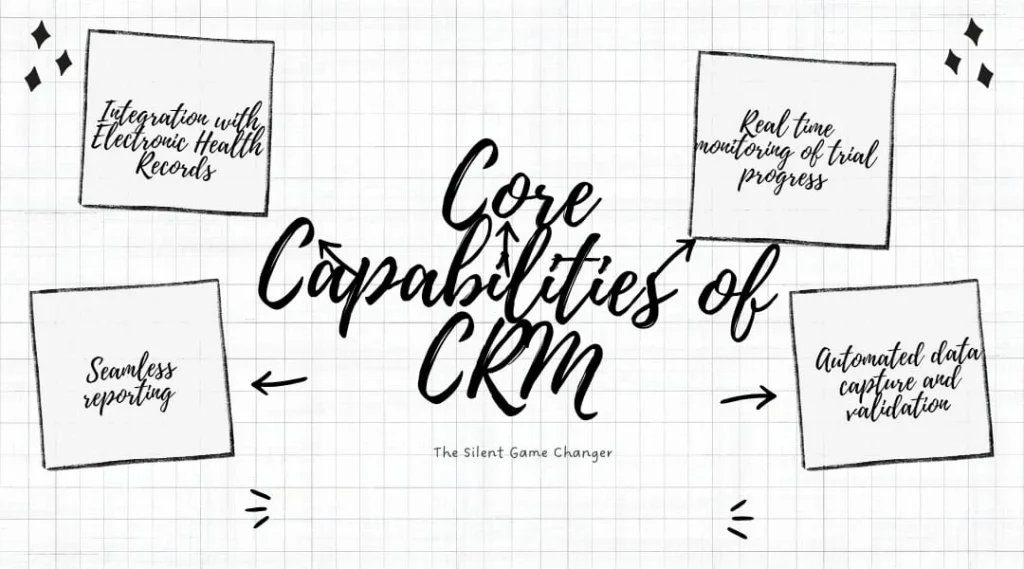
These systems are redefining how research is conducted from the ground up.
Core capabilities include:
- Automated data capture and validation
- Real-time monitoring of trial progress
- Integration with electronic health records
- Seamless reporting aligned with regulatory standards
But there’s a trade-off.
As research becomes more standardized and structured, it risks losing narrative depth—the very element that makes journal articles engaging and interpretable.
This creates tension between:
- Data efficiency
- Human readability
A detailed breakdown of this shift is discussed in How to Publish Clinical Audit in Indexed Journals.
The Attention Economy: Why Most Research Gets Ignored
Here’s the reality no one likes to admit:
Most research is not ignored because it lacks quality—it’s ignored because it lacks visibility.
In the era of big data jobs and algorithm-driven systems, attention has become the most valuable currency.
Key reasons why research goes unread:
- Poor keyword alignment with search algorithms
- Limited indexing in high-traffic medical journal databases
- Lack of integration with data analytics platforms
- Overproduction of similar, low-differentiation studies
Even publications in respected outlets like the medical science educator journal are not immune to this trend.
ClinicaPress dives deeper into this issue, exposing how visibility—not validity—is now the biggest bottleneck in research impact.
Beyond Publication: The Rise of Data Integration
Publishing a paper is no longer the finish line—it’s just one node in a larger network.
The real value of research today lies in its ability to integrate into:
- Clinical decision support systems
- Public health dashboards
- AI-driven diagnostic tools
- Policy-making frameworks
This shift is reinforced by global health strategies. The future of healthcare depends on interoperable data systems that enable seamless information flow across platforms.
Static journal articles cannot achieve this alone.
They must evolve—or risk becoming irrelevant.
Table: Traditional Journals vs Big Data-Driven Research
| Aspect | Traditional Journals | Big Data-Driven Systems |
| Speed of Dissemination | Slow (months) | Real-time or near real-time |
| Accessibility | Limited (paywalls, databases) | Broad (integrated platforms) |
| Data Volume Handling | Limited | Massive |
| User Engagement | Passive reading | Interactive analytics |
| Impact Measurement | Citations | Usage metrics, real-world outcomes |
| Role in Clinical Decisions | Indirect | Direct |
| Adaptability | Low | High |
How Researchers Must Adapt—Now, Not Later
If you’re publishing in today’s ecosystem, you’re not just writing for peer reviewers—you’re writing for machines, systems, and algorithms.
That changes everything.
Practical shifts researchers must adopt:
- Write for discoverability: Use structured abstracts, clear headings, and keyword alignment
- Think in data layers: Ensure your research can be broken into datasets, not just narratives
- Prioritize transparency: Open data increases integration potential
- Engage beyond journals: Share findings across platforms that feed into analytics systems
Because in this environment, visibility determines impact—and invisibility guarantees irrelevance.
For actionable strategies, see How to Choose the Right Medical Journal for Your Research Portfolio, which outlines how to position research for maximum reach.
The Future: Hybrid Models of Publishing and Data
The next phase of clinical research won’t eliminate journals—but it will redefine them.
We’re already seeing the emergence of hybrid models that combine:
- Traditional peer review
- Real-time data updates
- Interactive visualizations
- Machine-readable formats
In this model, a research paper is no longer static—it evolves as new data becomes available.
This approach aligns better with how clinicians actually use information: dynamically, contextually, and in real time.
Therefore, the journals that fail to adopt this model will gradually lose influence—not because they lack credibility, but because they lack usability.
Conclusion: Journals Are Not Dead—But They’re No Longer Enough
The rise of Big Data in Clinical Research has rewritten the rules of knowledge creation, distribution, and application.
Journals still matter—but their role has fundamentally shifted.
They are no longer:
- The primary gateway to knowledge
- The fastest channel of dissemination
- The sole measure of academic success
Instead, they are:
- Validation layers
- Archival systems
- Academic credentials
The real impact happens elsewhere—within data ecosystems that drive clinical decisions in real time.
If your research exists only as a published paper, it risks being forgotten.
But if it is integrated, accessible, and aligned with data-driven systems, it becomes actionable.
And in modern clinical research, action—not publication—is the only metric that truly matters.