Publishing in medical journals is not just an academic milestone; it is a financial decision that can shape a researcher’s career trajectory. The cost of publishing varies dramatically depending on journal type, access model, editorial services, and hidden compliance requirements. Many early-career researchers underestimate these expenses — then face delays, rejection, or ethical pitfalls.
This breakdown explains exactly where the money goes, what is justified, and where authors must be cautious.
Why Publishing in Medical Journs Is Expensive
Medical publishing operates under strict quality control because clinical evidence influences real-world patient care. Journals fund:
- Rigorous peer review systems
- Editorial management
- Statistical and ethics checks
- Digital archiving and indexing
- Long-term accessibility
According to the World Association of Medical Editors, editorial oversight alone requires specialized professionals, not automated screening. That cost is transferred to authors in many publishing models.
Prestige also inflates price. High-impact journals receive thousands of submissions and maintain rejection rates above 80%, which increases operational costs per accepted paper.
Open Access vs Subscription: Where Costs Shift
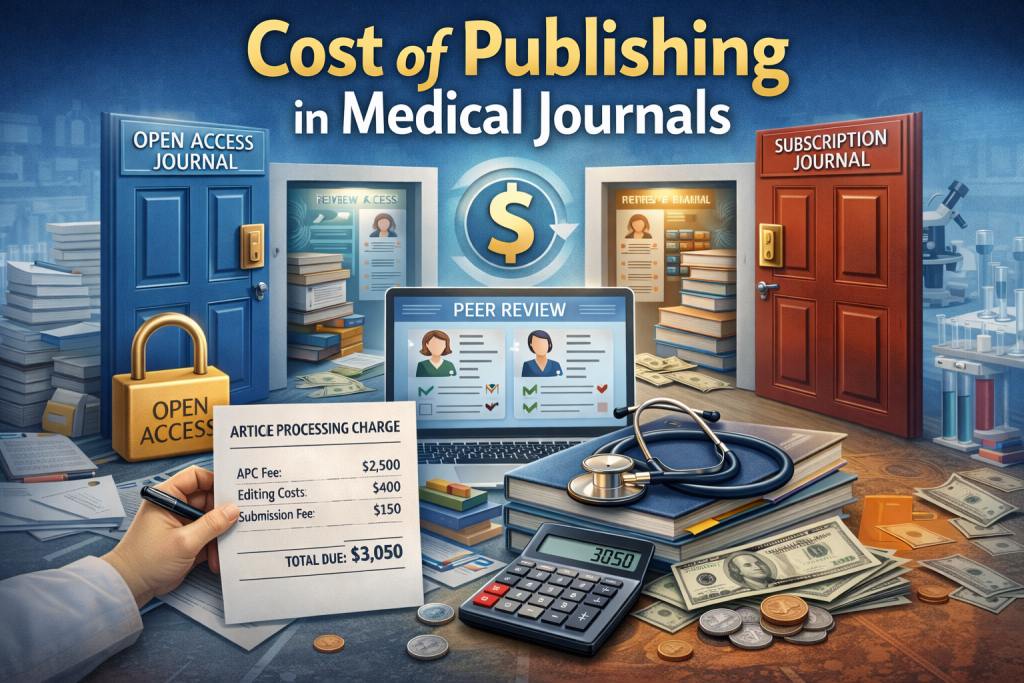
The biggest determinant of the cost of publishing in open access journals is who pays for access.
Open Access (Author Pays)
Authors pay Article Processing Charges (APCs), allowing anyone to read the research freely.
Typical APC range:
- $800 — low-tier journals
- $1,500–$3,500 — standard reputable journals
- $5,000+ — elite journals
Open access improves global visibility, especially in low-income regions where subscription access is limited, as noted by the National Institutes of Health.
Subscription Journals (Reader Pays)
Here, libraries and institutions pay subscription fees. Authors usually publish free — but may face optional charges for:
- Color figures
- Extra pages
- Fast-track review
Hybrid journals combine both models, often creating confusion about actual expenses.
Itemized Breakdown of Publishing Costs
Below is a realistic estimate of expenses researchers may encounter.
| Cost Component | Typical Range | Mandatory or Optional |
|---|---|---|
| Article Processing Charge | $1,000–$5,000 | Mandatory (OA journals) |
| Submission Fee | $50–$300 | Mandatory (some journals) |
| Language Editing | $200–$800 | Optional but recommended |
| Statistical Review | $300–$1,000 | Sometimes required |
| Color Figure Charges | $100–$500 per figure | Optional |
| Open Data Compliance | $100–$400 | Increasingly required |
These costs are separate from research expenses themselves — a distinction many grant proposals fail to account for.
Hidden Costs Authors Discover Too Late
Beyond official fees, several overlooked expenses raise the real cost of publishing:
1. Editing and Formatting
Journals reject manuscripts for language issues even when the science is strong. Professional editing becomes essential for non-native English authors.
2. Compliance Requirements
Ethics approvals, reporting checklists (CONSORT, PRISMA), and data-sharing mandates may require additional administrative work or consultancy fees. The Committee on Publication Ethics emphasizes strict adherence to these standards.
3. Revision Cycles
Each revision round can involve:
- Additional analyses
- New figures
- External statistical consultation
Time itself becomes a financial cost, especially for clinicians balancing research with practice.
Comparing Journal Tiers by Cost
Not all expensive journals are predatory, and not all cheap ones are trustworthy.
High-Impact Journals
- Highest APCs
- Strong credibility
- Extensive peer review
- Long decision timelines
Mid-Tier Reputable Journals
- Moderate APCs
- Reasonable acceptance rates
- Balanced visibility
Low-Cost or Suspicious Journals
Extremely low fees can signal predatory practices — journals that publish without genuine review. The Federal Trade Commission (ftc.gov) has warned about deceptive academic publishing scams.
How Publishing Costs Compare to Book Publishing
Researchers transitioning into academic writing often compare journal expenses with the publishing cost of a book.
Key differences:
- Journal publishing prioritizes dissemination speed
- Books prioritize sales and royalties
- Journals rarely pay authors
- Books may generate income
The cost of publishing a book includes cover design, ISBN registration, and marketing — expenses not typically required for journal articles.
However, both rely increasingly on digital platforms and self publishing tools, from manuscript formatting software to citation managers. Coverage of emerging platforms frequently appears in publishing tools news outlets such as Nature and Science Magazine.
Funding Options That Reduce Author Burden
Paying out of pocket is not always necessary.
Institutional Support
Universities often maintain open-access funds for faculty and students.
Research Grants
Many funding agencies allow APCs as reimbursable expenses. The National Science Foundation explicitly permits publication costs in grant budgets.
Fee Waivers
Journals may waive fees for authors from low-income countries or early-career researchers.
Collaborative Funding
Multi-institution studies can distribute costs among partners.
Smart Strategies to Minimize Publishing Expenses
Experienced researchers treat publishing as a financial planning exercise.
Before submission:
- Verify journal indexing and legitimacy
- Check full fee structure
- Confirm waiver eligibility
- Review acceptance rates (Explore more in our gude on Top 10 Medical Journals for Early Researchers with the Highest Acceptance Rates)
During manuscript preparation:
- Follow author guidelines precisely
- Use reference management software
- Prepare figures to required specifications
Avoiding technical errors prevents costly resubmissions.
The Real Question: Is the Cost Worth It?
Publishing is not just about paying fees — it is about visibility, credibility, and contribution to medical knowledge.
High-quality publication can lead to:
- Career advancement
- Grant success
- International collaboration
- Policy influence
Poor-quality or predatory publication can damage reputation permanently.
Researchers must therefore evaluate journals not only by price but by:
- Indexing status( get to know more about indexing in our guide on Difference Between Indexed and Non-Indexed Journals: A Complete Guide)
- Editorial board credibility
- Peer review transparency
- Ethical policies
Final Verdict
The true cost of publishing in medical journals is a combination of direct fees, preparation expenses, compliance requirements, and opportunity cost. There is no universal price — only a spectrum shaped by journal prestige, access model, and author preparedness.
Smart researchers budget early, verify legitimacy, and choose journals aligned with their goals rather than chasing prestige blindly.
Publishing should amplify science — not drain resources without return.