Understanding What “Indexed Journal” Means
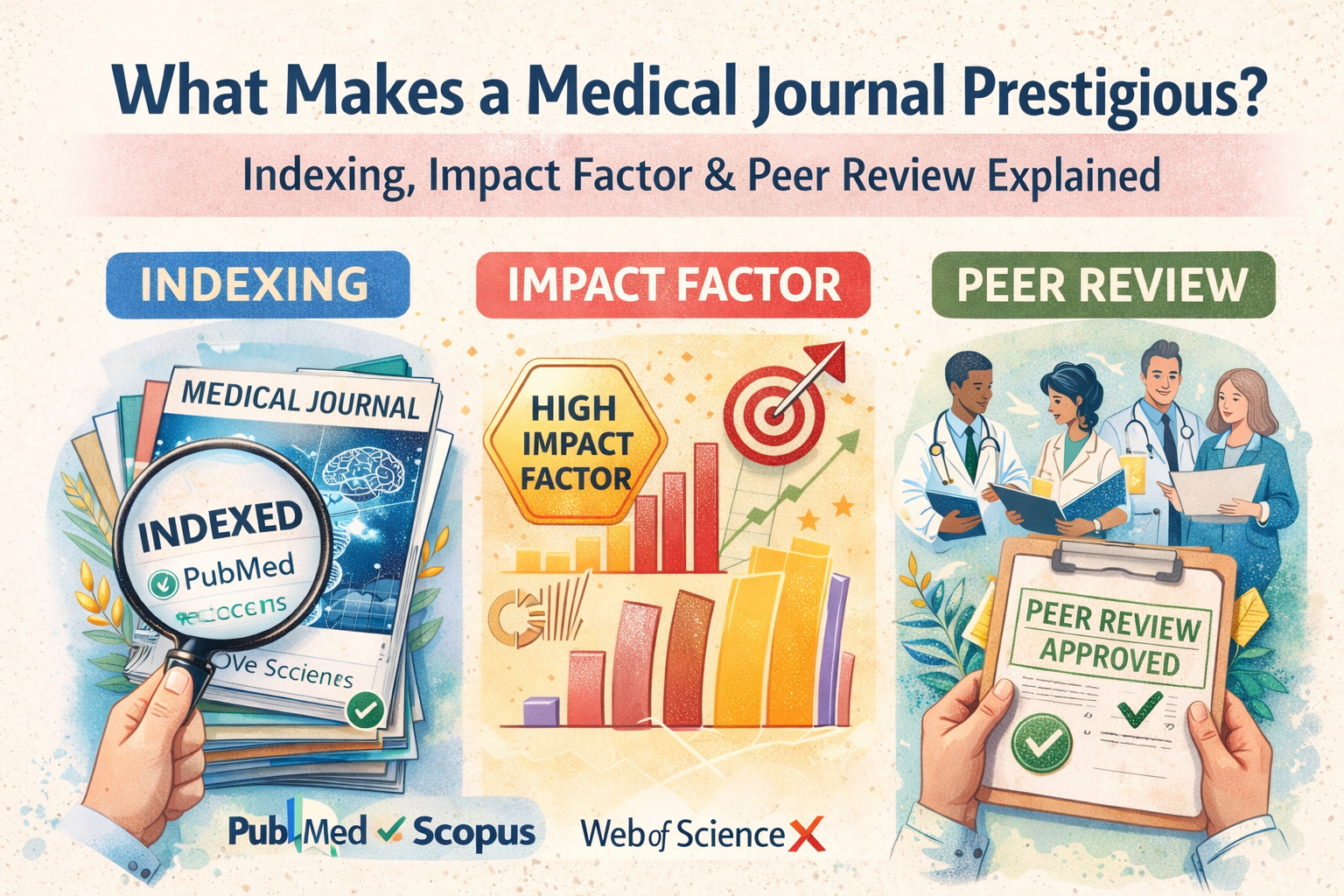
A journal that is indexed simply means it has been included in a reputable academic database after passing quality checks. Indeed, indexing ensures the journal meets standards of peer review, editorial ethics, and research quality. In short, if a journal is indexed, its research is more discoverable, more credible, and more citable.
Indexing databases act like trusted “libraries” of academic journals. Since, they organize and validate research, ensuring that scholars can find reliable, peer-reviewed work.
Why Indexing Matters for Authors and Researchers
Checking if a journal is indexed is a crucial step before submitting your manuscript. Indexed journals bring several benefits:
- Higher visibility: Indexed articles appear in global academic searches.
- Increased credibility: Indexing signals rigorous standards.
- Better chances of citation: Research in indexed outlets is more widely read.
- Funding and career opportunities: Many institutions require indexed publications.
- Protection against predatory journals: Predatory outlets often falsely claim indexing.
Simply put, indexation helps protect your academic reputation.
Major Indexing Databases to Check
Scopus
One of the largest abstract and citation databases. Scopus journals undergo strict evaluation through the Scopus Content Selection & Advisory Board.
Check Scopus Indexing: https://www.scopus.com/sources
Web of Science
Includes SCI, SSCI, AHCI, and ESCI. Considered one of the most selective indexing services.
Search here: https://mjl.clarivate.com/
PubMed & MEDLINE
Essential for medical, biological, and clinical research.
Verify here: https://www.ncbi.nlm.nih.gov/nlmcatalog/
DOAJ
Directory of Open Access Journals — ideal for open-access journal verification.
Search: https://doaj.org/
Google Scholar
More inclusive than selective indexes, but still useful for basic checks.
Step-by-Step Methods to Check If a Journal Is Indexed
Method 1: Check the Journal’s Official Website
Most reputable journals list their indexing databases clearly under sections like:
- Indexing
- Abstracting & Indexing
- About the Journal
- Information for Authors
Important: Predatory journals often lie about indexing. Always cross-check.
Method 2: Search Directly in the Indexing Database
Go to the official databases (Scopus, WoS, DOAJ, etc.) and search using:
- Journal name
- ISSN
- Publisher
If the journal appears in the database list, it is officially indexed.
Method 3: Verify ISSN Using Master Lists
Use official ISSN portals to confirm journal authenticity and indexing.
- ISSN Portal: https://portal.issn.org/
Make sure the journal’s ISSN matches the one shown on the journal’s website.
Method 4: Use Journal Finder Tools
Several tools allow you to search journals by keyword, scope, or discipline:
- Elsevier Journal Finder
- Springer Journal Suggester
- Wiley Journal Finder
These tools often specify if the journal is indexed.
Method 5: Contact the Publisher
If still unsure, write to the editorial office and ask:
“Could you please confirm the indexing status of your journal in databases like Scopus or Web of Science?”
Reputable journals respond transparently.
Red Flags of Non-Indexed or Predatory Journals
Beware of journals that show these warning signs:
- Promises of very fast publication (24–72 hours).
- Poorly written website content.
- Lack of editorial board information.
- Fake indexing badges or logos.
- Unverified impact factor claims.
- Publisher located in non-traceable addresses.
If something feels off, it probably is.
Tools to Validate Journal Quality
| Tool | Purpose |
|---|---|
| Scimago (SJR) | Ranks Scopus journals by subject area |
| JCR by Clarivate | Ranks Web of Science journals |
| DOAJ Seal | Confirms high-quality open access journals |
| Sherpa Romeo | Checks journal copyright policies |
| ISSN Portal | Verifies authenticity of ISSN |
These tools help researchers avoid poor-quality journals.
Frequently Asked Questions (FAQs)
1. How do I know if a journal is indexed?
Search for the journal in databases like Scopus, DOAJ, Web of Science, or PubMed.
2. Can a journal be indexed in multiple databases?
Yes. In fact, many high-quality journals appear in several indexing services.
3. What if a journal claims indexing but doesn’t appear in the database?
It is likely misrepresenting itself. Hence, avoid submitting it.
4. Is Google Scholar indexing enough?
No. Google Scholar is not selective. Instead, it indexes many low-quality sources.
5. Are all open-access journals indexed?
No. Instead, you should only those evaluated by databases like DOAJ or Scopus are considered reputable.
6. Does indexing affect journal impact factor?
Yes. In fact, only indexed journals can receive official impact factors.
Conclusion
Knowing how to check if a journal is indexed protects you from publishing in unreliable outlets and ensures your work reaches the academic community. Ultimately, y using official databases like Scopus, Web of Science, DOAJ, and PubMed, you can confidently verify the credibility of any journal.
For further verification, always cross-check the ISSN and review journal quality metrics through trusted ranking tools.