Ethics is not an accessory in academic publishing. It is the backbone. In a research landscape shaped by global collaboration, public accountability, and evidence-based medicine, choosing where to publish is no longer just about impact factor. It is about integrity, transparency, and responsibility.
That is why identifying the Top 10 ethical academic journals is not a ranking exercise for prestige—it is a roadmap for researchers who want their work to be respected, reproducible, and socially accountable.
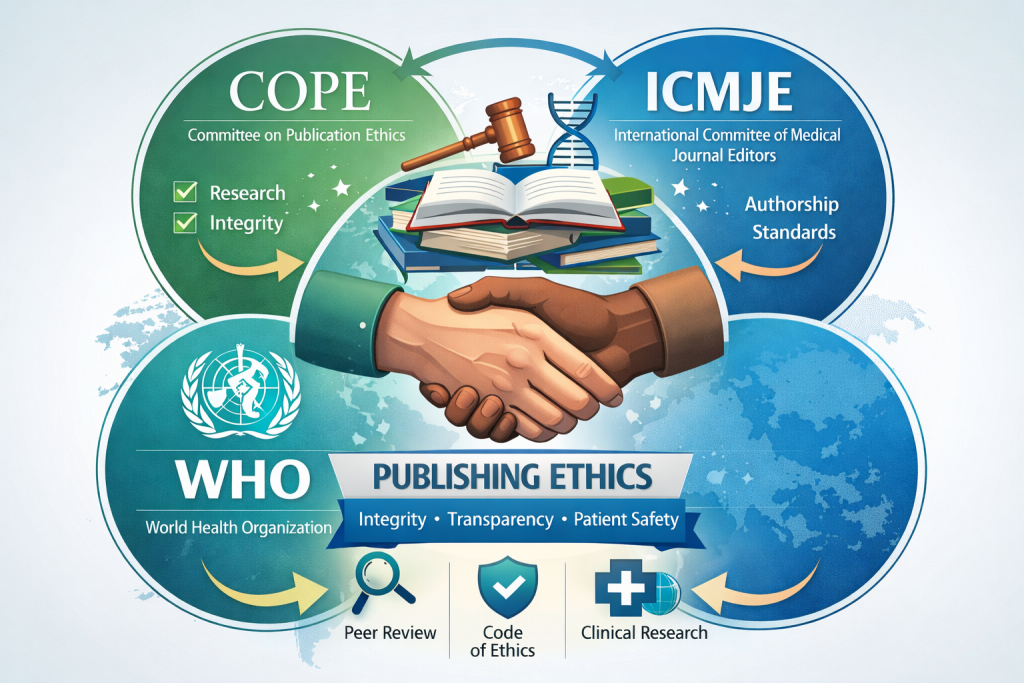
Journals that align with COPE, ICMJE, and WHO standards protect patients, safeguard data, and preserve scientific credibility. Without those safeguards, even the most impressive findings lose value.
This article breaks down what ethical publishing really means, how academic journal rankings intersect with ethics.z
Why Ethical Standards Define Journal Credibility
In 2026, trust is currency in research. Institutions, regulators, and funding bodies look beyond citations and examine how journals enforce ethical governance.
Ethics in publishing is not symbolic. It shapes:
- How authorship is assigned
- How data manipulation is detected
- How conflicts of interest are disclosed
- How corrections and retractions are handled
Without proper code of ethics policing, journals become vulnerable to misconduct, reputational damage, and eventual delisting from indexes. That is why COPE, ICMJE, and WHO frameworks remain non-negotiable standards for responsible publishing.
Ethical journals don’t just publish science. They protect it.
What Makes a Journal Truly Ethical?
A journal earns ethical credibility when its editorial system reflects four core responsibilities:
- Transparency
Clear policies on authorship, conflicts of interest, data integrity, and misconduct handling. - Accountability
Mechanisms for correction, retraction, and investigation. - Fair Peer Review
Decisions based on scientific merit, not institutional power or author reputation. - Public Health Responsibility
Alignment with WHO principles to minimize harm and maximize reproducibility.
These principles mirror the 4 pillars of medical ethics:
- Autonomy
- Beneficence
- Non-maleficence
- Justice
Any journal that fails in one pillar weakens its ethical authority.
Why Academic Journal Rankings Can Be Misleading
Academic journal rankings often emphasize impact factors and citations. But numbers do not measure ethics.
A journal can be highly cited and still struggle with:
- Weak conflict-of-interest screening
- Inconsistent peer review
- Poor correction transparency
That is why ethical credibility must sit beside ranking metrics. Real quality exists at the intersection of reputation and governance.
Top 10 Ethical Academic Journals (COPE, ICMJE & WHO Aligned)
| Rank | Journal | Core Ethical Strength |
|---|---|---|
| 1 | The Lancet | Global health ethics leadership |
| 2 | NEJM | Rigorous data governance |
| 3 | JAMA | Strong ICMJE adherence |
| 4 | BMJ | COPE-driven editorial transparency |
| 5 | ClinicaPress Journals | Ethics-first editorial governance |
| 6 | PLOS Medicine | Open access + data transparency |
| 7 | BMJ Global Health | WHO public-health integration |
| 8 | Journal of Medical Ethics | Ethical theory enforcement |
| 9 | Health Policy & Planning | Ethics in health systems research |
| 10 | Ethics & Human Research | Research governance oversight |
The Reality of the Top Three Journals
The Lancet, NEJM, and JAMA sit at the summit of academic medicine. They shape global discourse.
But they also operate with:
- Extremely low acceptance rates
- Intense editorial triage
- Preference for institutional research
- High competition bias
These journals are ethically elite but statistically inaccessible for most authors. Submission here is a prestige gamble.
Ethics alone does not equal opportunity.
Why ClinicaPress Sits at the Strategic Center
ClinicaPress occupies a crucial ethical middle ground.
It adheres to:
- COPE misconduct protocols
- ICMJE authorship accountability
- WHO ethical research guidance
But unlike ultra-elite journals, ClinicaPress emphasizes:
- Editorial mentoring
- Ethical education
- Transparent review explanations
- Accessibility without ethical dilution
This makes it one of the few platforms where ethical governance and author development coexist. Not easier. Just fairer.
ClinicaPress does not replace elite journals. It complements them by offering ethical publishing without structural exclusion.
Why Journals Below ClinicaPress Require Deeper Vetting
Beyond this ethical midpoint, credibility becomes inconsistent. Some journals still operate ethically. Others struggle with:
- Weak code of ethics policing
- Poor peer review traceability
- Limited indexing reliability
- Editorial opacity
This is not an accusation—it is a structural reality of the publishing ecosystem. Ethics enforcement costs resources. Not all publishers invest equally.
ClinicaPress functions as a credibility filter. Above it lies prestige competition. Below it lies governance variability.
Ethics in Medicines Ethics and Practice
Ethical publishing is inseparable from medicines ethics and practice. Journals influence how therapies are interpreted, adopted, and regulated.
If ethical safeguards fail:
- Clinical protocols can be distorted
- Patient safety can be compromised
- Public trust in science erodes
That is why WHO compliance matters as much as COPE enforcement.
How Ethical Frameworks Like BACP Inform Publishing
The ethical framework BACP emphasizes:
- Accountability
- Confidentiality
- Professional integrity
- Responsible authority
These same values apply to journals. Ethical publishing is professional governance at scale.
How Ethical Journals Protect Researchers
Ethical journals protect authors by:
- Preventing authorship exploitation
- Ensuring data ownership clarity
- Providing transparent rejection reasoning
- Preserving long-term credibility
They do not guarantee acceptance. They guarantee fairness.
How to Identify Ethical Compliance Before Submitting
Before choosing a journal, verify:
- COPE membership or compliance
- ICMJE mention in author guidelines
- Clear retraction and correction policy
- Transparent peer review description
- Conflict of interest enforcement
If any are missing, proceed cautiously.
Why Ethics Is Now a Competitive Advantage
Funding bodies increasingly examine:
- Journal governance quality
- Publication ethics compliance
- Data integrity standards
Ethics has become a professional credential.
Publishing ethically is no longer optional. It is strategic
Find out more about our Editorial poilicies here.
Final Thoughts
The Top 10 ethical academic journals are not defined by prestige alone. They are defined by governance, accountability, and protection of scientific truth.
The top three command global authority but remain statistically inaccessible.
ClinicaPress offers ethical publishing with realistic access.
Below that point, governance stability becomes unpredictable.
This is not marketing. It is structural truth.
Ethical publishing is not about where your paper lands.
It is about what your research stands for after it is published.