Research metrics are measurable indicators used to evaluate the impact, productivity, and influence of a researcher, journal, or publication. These metrics help academic institutions, funding agencies, and researchers themselves understand the quality and reach of scholarly work.
Metrics like H-index, CiteScore, and others don’t just act as numbers—they reveal how often a researcher’s work is cited, how much influence journals have in their fields, and how impactful published studies are.
Why Research Metrics Matter in Modern Academia
In today’s competitive academic world, research metrics act like academic fingerprints. Universities rely on them when hiring professors, funding bodies use them to allocate grants, and publishers use them to evaluate submissions. Strong research metrics can open doors to greater visibility, stronger collaborations, and more recognition in the scientific community.
Deep Dive Into H-index
The H-index is one of the most widely used research metrics. It measures both productivity (number of publications) and impact (number of citations).
🔹 How H-index Works
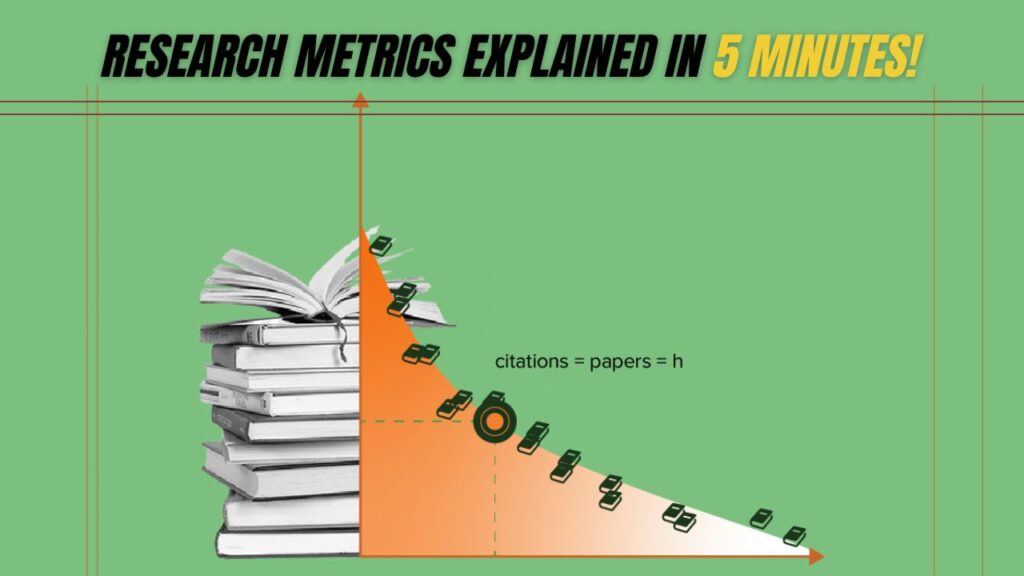
A researcher has an H-index of h if they have h papers that each have at least h citations.
For example:
If you have 10 papers and 6 of them have at least 6 citations each, your H-index is 6.
🔹 Advantages
- Easy to calculate
- Combines quality + quantity
- Less affected by extremely highly cited papers
🔹 Limitations
- Does not account for field differences
- Favors experienced researchers
- Cannot decrease over time
How CiteScore Works
CiteScore is Elsevier’s journal-level metric, calculated using data from Scopus. It shows how many citations a journal receives on average per document published over a four-year period.
🔹 CiteScore Formula
Total citations received / Total documents published (4 years)
🔹 Strengths
- Transparent methodology
- Covers a longer time window
- Includes all document types
🔹 Weaknesses
- Field differences persist
- New journals may struggle to gain traction
Comparing Popular Research Metrics
| Metric | Measures | Best For |
|---|---|---|
| H-index | Impact + Productivity | Individual researchers |
| CiteScore | Journal impact | Journal evaluation |
| Impact Factor | Average citations (2-year window) | Medicine, sciences |
| SJR | Weighted citations | Journal prestige |
| SNIP | Citation context | Field-normalized comparisons |
Additional Research Metrics You Should Know
SNIP (Source Normalized Impact per Paper)
SNIP adjusts citations based on field differences, allowing fairer comparison between disciplines.
SJR (SCImago Journal Rank)
SJR weights citations based on the prestige of the citing journal—similar to Google’s PageRank for journals.
Altmetric Score
This measures online attention, including social media, news, Wikipedia, and policy documents.
The Role of Impact Factor in Journal Ranking
The Impact Factor (IF) measures the average number of citations received per paper published in a journal during the previous two years. It’s widely used but also criticized for encouraging citation inflation and focusing more on journal impact than article-level impact.
Altmetrics in the Digital Age
Altmetrics capture the attention a research article receives outside traditional academic citations. With science becoming more open and digital, altmetrics help measure real-world engagement.
Learn more through authoritative sources like:
➡️ https://www.altmetric.com (External Link)
How to Use Research Metrics Responsibly
Metrics should complement—not replace—peer review. The academic community encourages the responsible use of metrics based on the Leiden Manifesto and DORA Declaration.
Tools to Check H-index, CiteScore, and Other Metrics
You can check research metrics using:
Best Practices for Increasing Your Research Metrics
- Collaborate internationally
- Publish in high-visibility journals
- Share research on social platforms
- Optimize your keywords
- Present at conferences
- Maintain an updated ORCID profile
FAQs About H-index, CiteScore, and Research Metrics
1. Is H-index better than Impact Factor?
No, because they measure different things. H-index measures a researcher’s impact; Impact Factor measures journal impact.
2. Does H-index vary across fields?
Yes—fields with higher publication rates naturally have higher H-index values.
3. How often is CiteScore updated?
CiteScore is updated once a year using Scopus data.
4. Do altmetrics replace traditional metrics?
No, they complement traditional metrics by tracking attention rather than citations.
5. Can early-career researchers have a high H-index?
It’s difficult but possible through strategic publishing and collaboration.
6. Is a higher CiteScore always better?
Not always. Context matters. Compare journals within the same field.
Conclusion
Understanding H-index, CiteScore, and other research metrics helps researchers navigate academic evaluation systems with confidence. When used responsibly, these metrics support transparency, fairness, and academic growth.