Introduction to Open Access
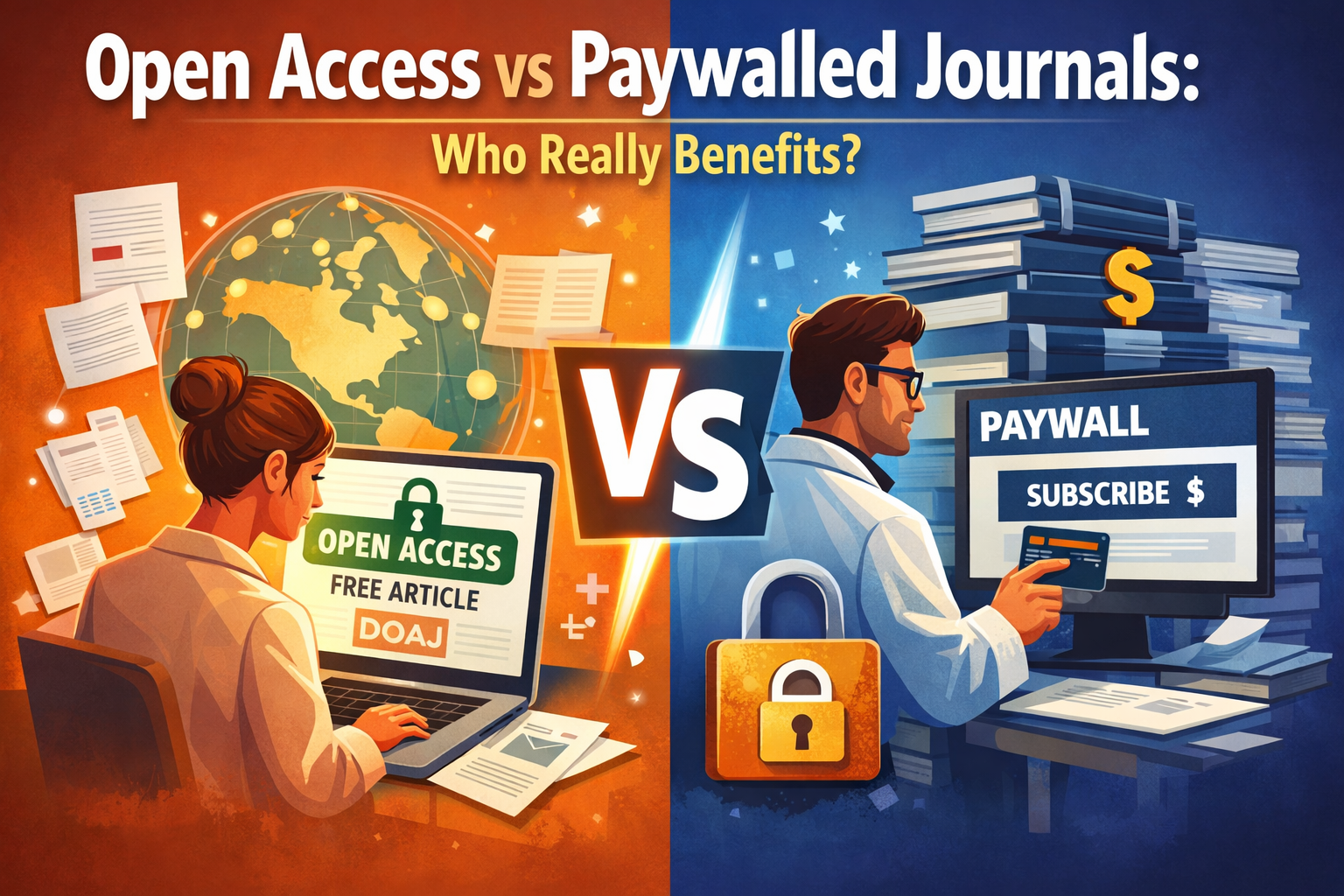
In the world of academic publishing, open access (OA) has become more than just a trend—it’s a movement redefining how knowledge is shared. Traditionally, scholarly research was locked behind expensive paywalls, limiting who could access cutting-edge findings. Today, open access breaks down those barriers, allowing anyone—students, researchers, policymakers, or the public—to read and use scientific work freely online.
But what exactly does “open access” mean, and why should researchers care? Let’s dive deep into the concept, explore its benefits, and understand how to make the most of it in your academic career.
What Does “Open Access” Mean?
At its core, open access refers to the free, immediate, and unrestricted availability of scholarly research online. Unlike traditional subscription-based journals, OA content can be read, downloaded, shared, and reused without cost to the reader.
In practical terms, this means that anyone with an internet connection can read your work without paying journal fees or subscription costs—maximizing your visibility and academic impact.
The Evolution of Open Access in Scholarly Publishing
The concept of open access traces back to the early 2000s with major declarations like the Budapest Open Access Initiative (2002) and the Berlin Declaration (2003). These landmark events championed the democratization of knowledge.
Since then, major funding bodies (like the European Research Council and NIH) have mandated open access publication for publicly funded research. As a result, OA has evolved from a fringe idea to a central pillar of academic communication.
Why Open Access Matters for Researchers
The Benefits of Open Access for Authors and Readers
- Increased Visibility & Citations: Research shows that OA papers receive more citations and downloads compared to paywalled articles.
- Broader Reach: Your findings become accessible to scientists in developing nations, students, and non-academic audiences.
- Enhanced Collaboration: Open data and accessible results encourage interdisciplinary research and knowledge exchange.
How Open Access Promotes Global Knowledge Sharing
Open access publishing creates a level playing field, empowering researchers globally. Institutions that cannot afford expensive journal subscriptions can still access the same quality research as top universities.
It’s a win-win for both knowledge producers and knowledge consumers—an academic ecosystem built on transparency and collaboration.
Types of Open Access Publishing Models
Open access isn’t one-size-fits-all. There are several models researchers can choose from depending on their funding and institutional support.
Gold Open Access
Authors pay an Article Processing Charge (APC) to make their paper immediately available upon publication. Journals like PLOS ONE and Frontiers in Psychology follow this model.
Green Open Access
Authors self-archive their papers (often preprints or accepted manuscripts) in institutional or subject repositories. This version becomes openly accessible even if the journal itself is paywalled.
Hybrid Open Access
Traditional subscription journals offer an optional open access route for individual articles upon payment of an APC.
Diamond (or Platinum) Open Access
Completely free for both readers and authors—funded by institutions, societies, or grants. It’s the most equitable model, though less common.
Open Access Journals Explained
What Does an Open Access Journal Mean?
An open access journal publishes research freely available online without paywalls. Such journals typically maintain high editorial standards and provide permanent access to their archives.
Are Open Access Journals Peer Reviewed?
Yes, most open access journals are peer reviewed. The peer-review process remains central to maintaining scientific integrity. However, beware of predatory journals that mimic legitimate ones but lack rigorous editorial review.
Do Open-Access Journals Have Publishers?
Absolutely. Open access journals are often published by established organizations such as SpringerOpen, MDPI, Elsevier, or Wiley Open Access, ensuring quality and credibility.
Do Open Access Journals Have Impact Factors?
Yes. Many reputable OA journals have impact factors listed in databases like Journal Citation Reports (Clarivate Analytics). For example, Nature Communications and Scientific Reports are high-impact OA journals.
Financial Aspects of Open Access Publishing
Are Open Access Journals Free to Publish In?
Not always. While some OA journals (like Diamond OA) are free, others require Article Processing Charges (APCs). The cost can range from $500 to $5,000, depending on the publisher and journal prestige.
Understanding Article Processing Charges (APCs)
APCs cover expenses such as editorial work, typesetting, hosting, and long-term archiving. Many universities and funding agencies now provide APC support for researchers to ensure equitable publishing opportunities.
How to Choose the Right Open Access Journal
Checking Credibility and Peer Review Process
Always verify that the journal is indexed in Scopus, DOAJ, or Web of Science and follows transparent peer-review guidelines.
Avoiding Predatory Journals
Be cautious of journals promising quick publication or lacking editorial boards. Use resources like Beall’s List and Think. Check. Submit. to spot red flags.
Tools to Identify Legitimate Open Access Journals
Platforms like DOAJ (Directory of Open Access Journals) and OpenAlex list credible journals that adhere to open publishing principles.
The Future of Open Access Publishing
Emerging Trends and Innovations
AI-driven editorial systems, preprint culture, and decentralized research repositories are reshaping the future of open science.
How Open Access Supports Sustainable Science
By reducing barriers, OA contributes to research equity, data transparency, and environmentally sustainable publishing (fewer print copies, reduced waste).
FAQs
Q1: Are open access journals considered credible?
Yes, as long as they follow standard peer-review and ethical guidelines.
Q2: How can I verify if a journal is open access?
Check if it’s listed in the Directory of Open Access Journals (DOAJ).
Q3: Do open access papers get cited more often?
Studies show that OA articles typically receive 30–50% more citations on average.
Q4: Can I publish in open access journals without funding?
Yes. Many institutions have APC waivers or diamond OA options that require no payment.
Q5: Are hybrid journals a good option?
Yes, if you prefer publishing in a subscription journal but still want your article openly accessible.
Q6: What’s the difference between gold and green OA?
Gold OA = published version is open; Green OA = author self-archives a version.
Conclusion: The Path Toward a More Open Research Ecosystem
Open access isn’t just a publishing model—it’s a movement toward transparency, collaboration, and global inclusivity in research. For scholars and scientists, embracing open access means greater visibility, stronger impact, and a legacy of knowledge that transcends paywalls.
To explore reputable OA journals, visit the Directory of Open Access Journals (DOAJ) —a trusted platform listing thousands of peer-reviewed journals across all disciplines.