The Hard Truth About “Language Editing”
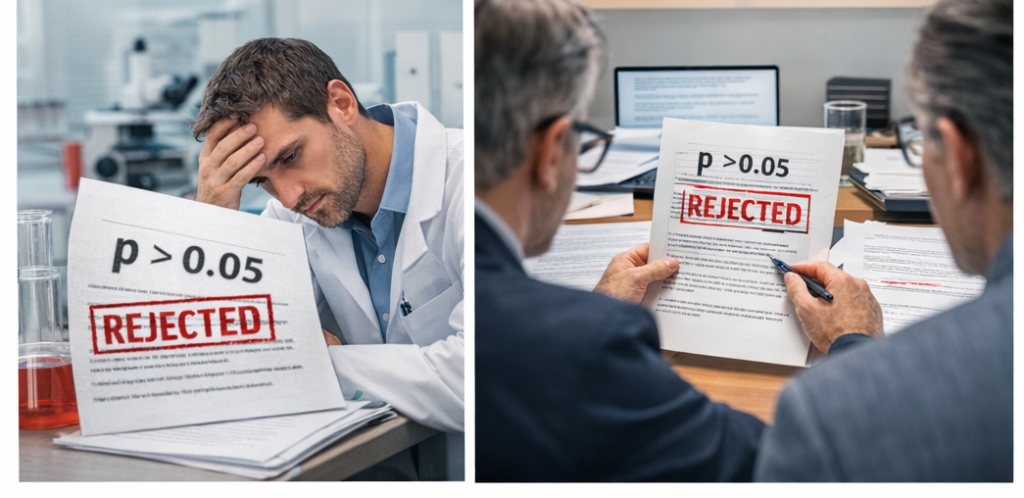
You paid for language editing. The grammar is clean. Sentences flow. And still got desk rejection.
Here’s the brutal reality: language editing is not scientific editing. Journals don’t reject medical manuscripts because of commas. They reject them because the science doesn’t hold, the structure leaks, and the logic collapses under peer review. It fails to make a convincing point, but mostly carries a balanced approach.
Let’s dissect exactly why polishing words won’t rescue weak research — and what actually moves the acceptance needle.
The Desk Rejection Nobody Warns You About
Editors skim your paper in under three minutes. Not kidding. If your manuscript fails the first-pass logic test, it’s dead — no matter how perfect your English is.
According to editorial guidance from the International Committee of Medical Journal Editors , editors prioritize methodological soundness and transparency before language quality. Grammar only matters after science survives.
Language editing fixes the form. Do you understand it just fixes and do not lay the base?
Editors are hunting flaws in substance.
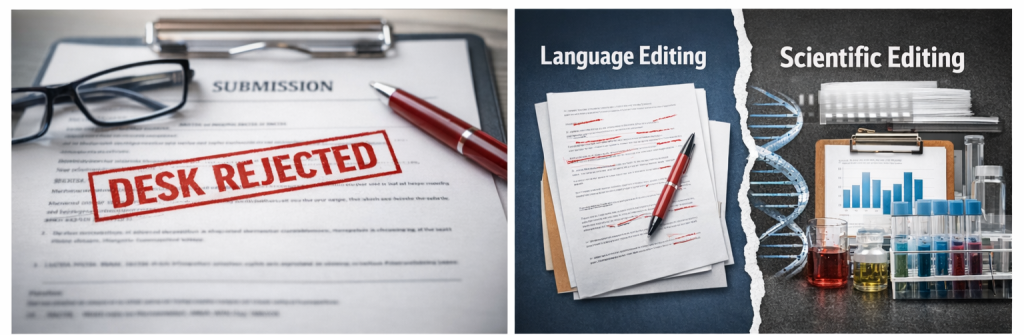
Language Editing vs Scientific Editing — Not the Same Game
This is where authors self-sabotage.
| Language Editing | Scientific Editing |
| Grammar & tone | Study design clarity |
| Flow & readability | Hypothesis logic |
| Sentence polish | Methods reproducibility |
| Style guide compliance | Statistical coherence |
A well-written paper with bad science is still bad science.
That’s why journals reject manuscripts that look “professionally edited” — because peer reviewers don’t read for beauty; they audit for truth.
Medical Manuscript Rejection Reasons No One Mentions
You think your rejection was about English?
Nah.
These are the real medical manuscript rejection reasons hiding in plain sight:
- Weak or unclear research question
- Methods that don’t match objectives
- Sample size that can’t defend the conclusion
- Statistical claims that oversell the data
- Discussion sections that recycle textbook theory instead of interpreting findings
The NIH’s guidelines on rigor and reproducibility make it clear: if your design is sloppy, language editing is cosmetic surgery on a failing heart.
Journal Desk Rejection Causes That Editing Can’t Fix
Let’s be surgical.
Your paper dies early because of journal desk rejection causes like:
1. Structural collapse
Your introduction promises A.
The Methods deliver B.
Your conclusion claims C.
This disconnect is invisible to language editors but screams incompetence to reviewers.
2. Thin methods
If another researcher can’t replicate your work from your methods section, your manuscript is not science — it’s storytelling.
The EQUATOR Network reports that poor reporting quality is one of the biggest reasons for peer-review failure in clinical research.
Peer Reviewer Expectations in Medical Journals
Peer reviewers are not teachers. They are gatekeepers.
Their checklist looks like this:
- Does the design match the clinical question?
- Are variables defined like a protocol, not a blog?
- Do results answer the hypothesis — or dodge it?
- Is the discussion analytical or just literature dumping?
If your manuscript misses any of this, no amount of edit pdf magic will save it.
Why “Experience Edition” Editors Still Miss Fatal Flaws
Here’s a tough pill: many “experience edition” editing services are staffed by language professionals — not clinical researchers.
They:
- Fix verbs.
- Smooth transitions.
- Rephrase sentences.
But they don’t challenge your statistics.
They don’t question your study logic.
They don’t restructure flawed argument flow.
That’s how authors submit grammatically perfect papers that still fail clinical paper peer review failure patterns every single month.
Latest Research Papers on AI in Medical Diagnosis: A Case Study in Overconfidence
Take a look at the explosion of latest research papers on AI in medical diagnosis. Many of these manuscripts sound futuristic but fall apart under scrutiny.
Nature reported recently that AI-focused medical studies are facing increasing retractions due to reproducibility gaps .
What goes wrong?
- Models aren’t validated externally.
- Training datasets aren’t described transparently.
- Conclusions promise clinical impact without clinical trials.
Again — language editing didn’t fail them. Scientific discipline did.
Research Example Paper: What “Journal-Ready” Actually Means
Here’s what a real research example paper looks like to reviewers:
- The introduction narrows to one tight research gap — no wandering.
- The methods read like a protocol, not a narrative.
- Results answer only what was asked — no flexing.
- Discussion admits limitations before reviewers weaponize them.
That’s scientific editing. Not grammar rehab.
Limited Edition Mistakes That Kill Submissions
Some flaws are rare — but deadly. Think of them as the limited edition limited errors:
- Post-hoc hypothesis changes
- Retrofitted outcomes after seeing results
- Selective reporting masked by clean language
The World Health Organization’s research ethics framework flags these as integrity violations — not editing issues.
What You Should Demand Instead of Just Language Editing
If you’re still paying only for surface-level edits, you’re funding rejection.
Demand services that:
- Audit your study logic
- Cross-check objectives with outcomes
- Stress-test your discussion against your own data
- Flag overinterpretation before reviewers do
That’s the difference between “edited” and publishable.
Final Reality Check
Language editing is hygiene.
Scientific editing is survival.
If your manuscript isn’t structurally airtight, statistically defensible, and logically ruthless — no journal will care how fluent your English is.
Hence, humans are key part of drafting and finalizing any research paper.
Stop polishing sentences.
Start fixing science.
That’s how medical papers get accepted.