
Open access is no longer a “nice-to-have” in academic publishing. It’s policy, pressure, and—whether we like it or not—power. Funding agencies demand it. Journals monetize it. Institutions measure it. And authors? They’re often left confused, choosing between Gold vs Green Open Access without a clear, ethical, or strategic framework.
This article cuts through the noise. No hype. No publisher marketing spin. Just a grounded, editorial-grade breakdown of gold open access, green open access, and what each really means for authors working within modern open access publishing systems—especially those operating in systems research and applications and advanced research systems under academic scrutiny.
Why the Gold vs Green Open Access Debate Actually Matters
Open access isn’t just about “free PDFs.” It shapes:
- Who can read your work
- Who profits from your research
- How your institution evaluates you
- Whether your work aligns with funder mandates
According to the Budapest Open Access Initiative, open access was originally intended to remove price and permission barriers, not shift costs onto authors. Yet today’s reality looks very different.
That’s where the Gold vs Green divide becomes critical—and political.
Gold Open Access Explained (Beyond the APC Brochure)
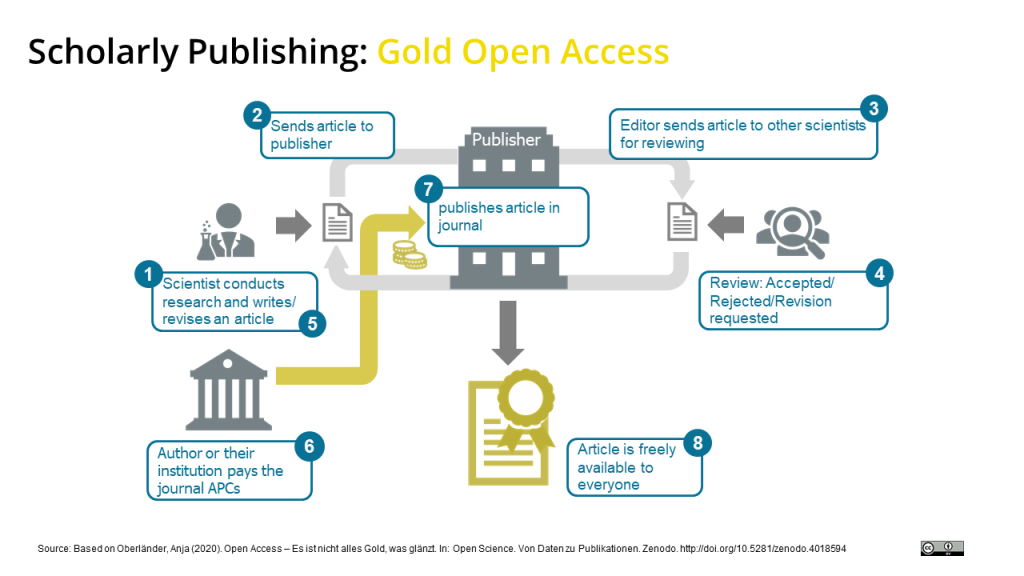
Gold open access means your article is immediately available on the publisher’s website, free to read for everyone.
Sounds ideal. Until you hit the invoice.
How Gold Open Access Works
- Article published in an open access or hybrid journal
- Immediate public access
- Usually requires an Article Processing Charge (APC)
- APCs often range from USD 1,500 to over USD 10,000
Major publishers like Elsevier and Springer Nature dominate this space, which has triggered criticism from the academic research consortium community for reinforcing inequities .
Ethical Tension in Gold Open Access
Gold OA shifts cost from readers to authors—but not all authors are equal.
Researchers from low- and middle-income countries often:
- Rely on waivers (not guaranteed)
- Publish in lower-tier OA journals
- Face systemic visibility bias
This is why UNESCO’s Open Science Recommendation warns against pay-to-publish models that undermine research equity .
Gold OA is not unethical by default—but it is not neutral.
Green Open Access: The Underused Ethical Backbone
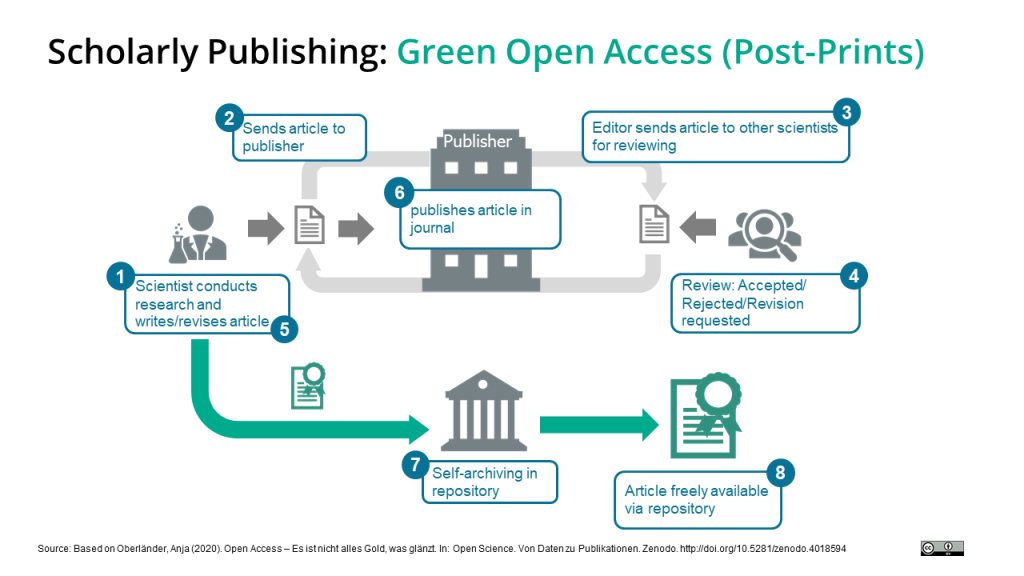
Green open access allows authors to archive a version of their manuscript in a repository—usually institutional or subject-based.
No APCs. No flashy publisher landing pages. Just access.
What Green Open Access Really Means
- Article published in a subscription journal
- Author deposits preprint or accepted manuscript
- Access may be delayed by an embargo
- Repository provides long-term preservation
Platforms like PubMed Central and institutional repositories are core to this system, particularly in advanced research systems where reproducibility matters .
Why Green OA Is Often Undervalued
Green OA doesn’t generate revenue for publishers—so it’s rarely promoted.
But from an integrity perspective, it:
- Preserves author rights
- Reduces financial barriers
- Aligns closely with open science principles
For many authors, Green OA is the most ethical default, especially when APC funding is unclear or conditional.
Gold vs Green Open Access: A Direct Comparison
| Dimension | Gold Open Access | Green Open Access |
| Reader access | Immediate | Delayed or immediate |
| Cost to author | High (APCs) | Usually free |
| Publisher control | Strong | Limited |
| Author rights | Often restricted | Stronger |
| Equity impact | Uneven | More inclusive |
| Long-term archiving | Publisher-dependent | Repository-based |
This table matters because it exposes the structural trade-offs—not the marketing claims.
Where This Hits Hardest: Systems Research and Applications
In systems research and applications, visibility and reuse are essential. Data, models, and frameworks need to circulate freely.
Gold OA journals often promise reach—but Green OA repositories:
- Enable version tracking
- Support reproducibility
- Integrate with institutional assessment systems
ClinicaPress has previously highlighted how overreliance on publisher-hosted access can distort citation and compliance metrics (see publication ethics coverage on ClinicaPress).
How Gold and Green Open Access Flow Differently
Funders, Mandates, and the Myth of “Free Choice”
Many authors assume they’re choosing freely between Gold vs Green Open Access. In reality, mandates decide.
- Plan S (Europe) favors immediate OA
- NIH mandates repository deposition
- Institutional policies often default to Green OA
The National Institutes of Health explicitly supports Green OA through PubMed Central, emphasizing public accountability over publisher preference .
If your funder allows Green OA, paying an APC is a choice, not a requirement.
Predatory Journals Exploit the Gold Narrative
One uncomfortable truth: gold open access has been weaponized.
Predatory journals:
- Mimic legitimate Gold OA models
- Charge APCs without peer review
- Target early-career researchers
ClinicaPress has documented warning signs in its guide on identifying unethical journals, a must-read before submitting anywhere that emphasizes speed over scrutiny.
Green OA, by contrast, is far harder to exploit.
So—What Should Authors Actually Choose?
There is no universal answer. But there is a responsible decision framework.
Choose Gold Open Access if:
- APCs are transparently funded
- Journal has proven editorial integrity
- Immediate access is mandated
- Licensing terms protect reuse
Choose Green Open Access if:
- APCs are a personal or institutional burden
- Journal allows repository archiving
- Long-term access matters more than branding
- You prioritize equity and sustainability
For most authors, especially those outside elite funding ecosystems, Green OA is the smarter ethical baseline.
The Editorial Bottom Line
The Gold vs Green Open Access debate is not about prestige—it’s about power.
Gold OA dominates because it’s profitable.
Green OA persists because it’s principled.
As open access publishing evolves, authors must stop asking, “Which looks better?” and start asking, “Which aligns with academic integrity?”
That answer, more often than not, points green.