If you believe a publisher will “fix” your manuscript after submission, you are already miscalculating your publishing strategy.
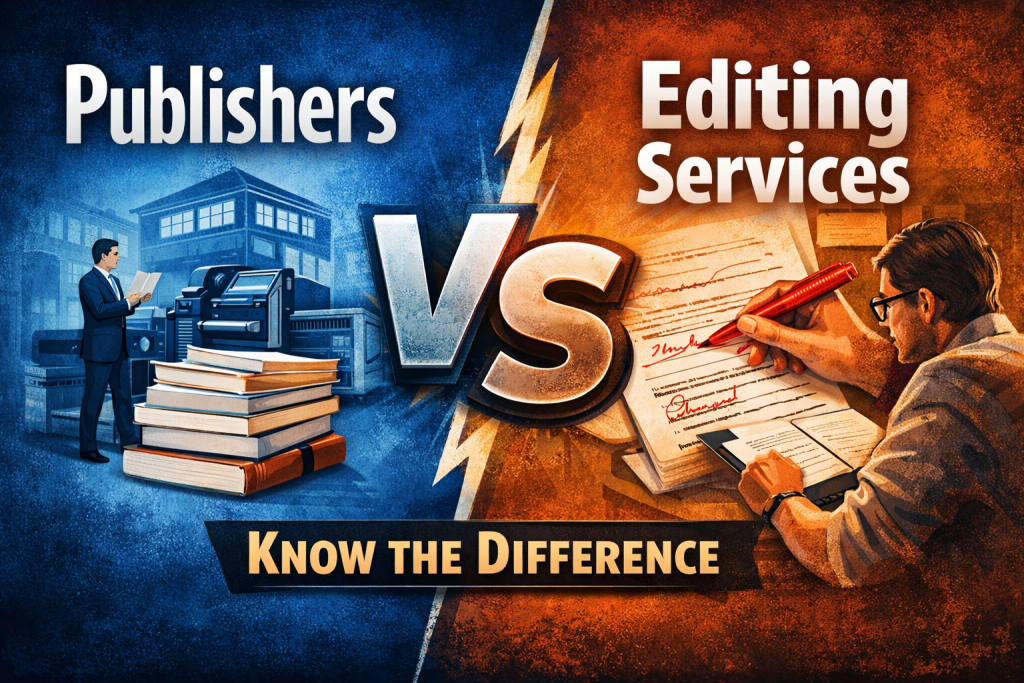
The debate around publishers vs editing services is not semantic. It determines whether your work gets accepted, rejected, or ignored. Authors who misunderstand this distinction often submit too early, print too soon, and compromise credibility.
Let’s draw a clean line between the two — no myths, no assumptions.
Publishers Are Gatekeepers, Not Repair Technicians
A publisher’s core responsibility is selection and distribution.
They assess:
- Market viability
- Audience demand
- Commercial positioning
- Strategic alignment
- Brand compatibility
They do not serve as pre-submission editors for unpolished drafts.
In traditional key publishing, internal editorial teams refine manuscripts only after acquisition. That refinement improves already strong work; it does not rebuild weak structure or correct fundamental writing issues.
If your manuscript lacks clarity, coherence, or formatting precision, it is filtered out before it reaches deeper review stages.
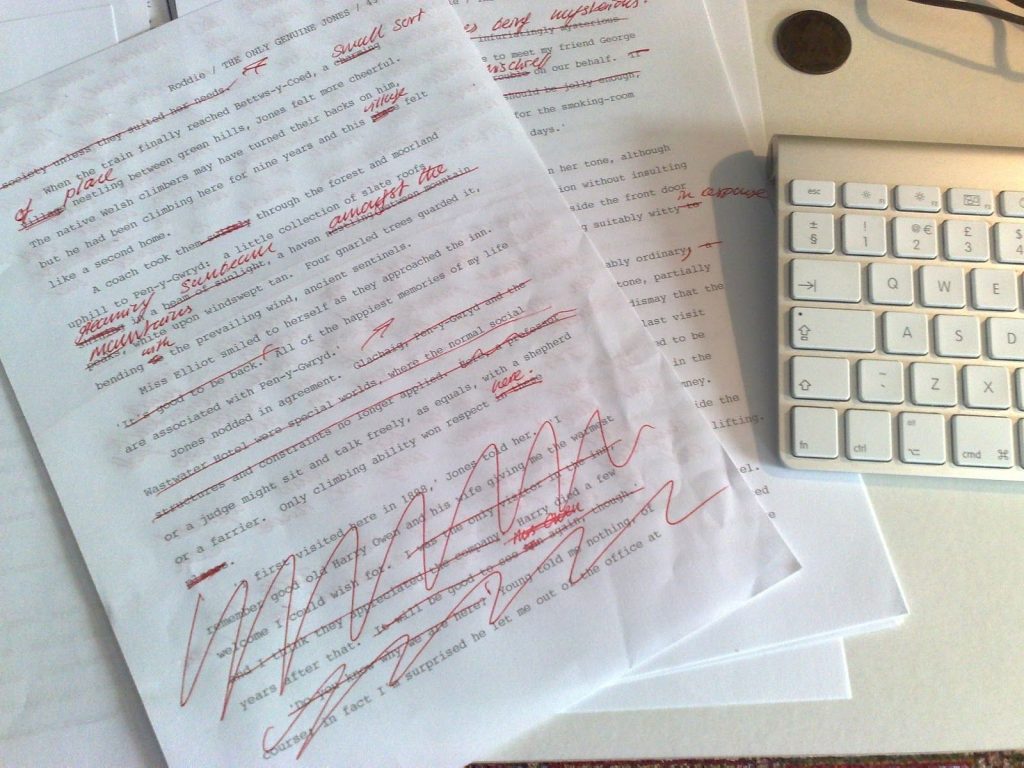
Editing Services Exist Before Submission
Editing services operate in the preparation phase.
Their role includes:
- Structural editing
- Argument flow refinement
- Copyediting
- Reference verification
- Grammar correction
- Consistency checks
This is where manuscripts are strengthened — not during publishing.
Authors exploring books on print platforms sometimes assume the printing provider will flag content problems. That assumption is costly. Print services focus on formatting and production, not intellectual clarity.
Editing is intellectual labor. Printing is mechanical production.
They are not interchangeable.
Where Books for Printing Fit In
The rise of books for printing services and self-publishing platforms has blurred professional boundaries.
Print services provide:
- File formatting tools
- Cover upload systems
- ISBN processing
- Distribution logistics
They do not provide developmental editing. Here is the same for Clinicapress.
Do not Worry!
We care for you and have brought professional proofreading service for your journals on Paperedit.
Once a manuscript is uploaded and printed, errors become permanent. A flawed book in circulation damages professional authority — particularly in academic or clinical fields. Get to know more about the process in our guide titled: Manuscript Submission to Publication Process.
If you are applying for publishing jobs or editor jobs, your own published work becomes part of your professional portfolio. Quality matters.
Publishers vs Editing Services: A Direct Comparison
Below is a practical breakdown of the difference:
| Function | Publishers | Editing Services |
| Evaluate market viability | ✔ | ✘ |
| Improve grammar & clarity | ✘ (pre-acceptance) | ✔ |
| Restructure weak arguments | ✘ | ✔ |
| Provide distribution channels | ✔ | ✘ |
| Manage printing and production | ✔ | ✘ |
| Prepare manuscript before submission | ✘ | ✔ |
| Offer publishing-related jobs | ✔ | Sometimes (freelance roles) |
| Take financial risk on project | ✔ | ✘ |
Understanding this table eliminates confusion.
Publishers invest in ready products.
Editors prepare manuscripts to reach that level.
Why This Distinction Protects Academic Integrity
In clinical, research, and academic writing, clarity is ethical responsibility.
Poor editing leads to:
- Misinterpretation of findings
- Citation inconsistencies
- Ambiguous claims
- Rejection without peer review
Editorial preparation safeguards credibility.
A publisher assumes that submission equals readiness. Submitting unfinished work signals unprofessionalism, not potential.
For authors building authority, especially in research-based fields, that signal matters.
The Impact on Career Pathways
Writers interested in editor jobs or long-term roles in key publishing need to internalize this workflow early.
Inside publishing houses, editorial staff work on manuscripts that have already passed acquisition filters. They are not assigned raw drafts from unknown authors.
Similarly, professionals pursuing publishing jobs are expected to demonstrate polished writing competence.
Understanding the publishing ecosystem strengthens both submission outcomes and career positioning.
The Correct Publishing Workflow
Here is the order serious authors follow:
- Draft manuscript
- Professional editing
- Peer or subject-matter review
- Formatting alignment
- Publisher submission
- Production and printing
Skipping step two is the most common mistake.
Submitting early does not accelerate publication. It delays it.
Why Authors Keep Confusing the Two
Three reasons drive the confusion:
1. Marketing Language
Some platforms blur terminology, suggesting comprehensive support while offering only production services.
2. The Rise of Self-Publishing
With easier access to books on print, authors assume the pathway is simplified. It is simplified logistically — not intellectually.
3. Financial Assumptions
Some writers believe publishers will absorb editing costs before acceptance. In reality, publishers invest after acquisition, not before.
Clarity eliminates wasted effort.
Final Takeaway: Professional Boundaries Matter
The conversation around publishers vs editing services is not about hierarchy.
It is about function.
Publishers:
- Select
- Invest
- Distribute
Editing services:
- Refine
- Clarify
- Strengthen
If your manuscript is not structurally sound before submission, no reputable publisher will compensate for that gap.
Publishing is a business decision.
Editing is preparation for that decision.
Understand the sequence. Respect the process. Protect your credibility.