
In academic medicine, one question keeps resurfacing:
Should you invest in building a strong research portfolio, or focus all your energy on publishing a single high-impact paper?
The answer isn’t diplomatic. It’s strategic.
Read How to Choose the Right Medical Journal for Your Research Portfolio?
Journal acceptance today is not just about what you publish—it’s about who you are as a researcher across time. Editors are no longer evaluating isolated brilliance; they are assessing consistency, credibility, and trajectory.
Learn more from High Acceptance Rate vs High Impact Factor: What Should You Prioritize?
Let’s break it down with precision—no fluff, no academic myths.
The Reality of Medical Journal Acceptance Today
Medical publishing is saturated. Top-tier journals reject the majority of submissions—not always because the science is bad, but because it doesn’t fit into a broader editorial vision.
According to insights discussed in a National Institutes of Health (NIH) article, modern journals prioritize:
- Reproducibility over novelty alone
- Transparency over flashy results
- Consistency over isolated excellence
- Author credibility alongside manuscript quality
This signals a fundamental shift: your track record is part of your submission.
Editors are asking silently:
Can this researcher be trusted again?
What Is a Research Portfolio in Academic Medicine?
A research portfolio is not a random stack of publications. It is a coherent academic narrative.
It reflects how your thinking evolves, how your questions deepen, and how your contributions connect.
A strong portfolio includes:
- Peer-reviewed publications
- Case reports and clinical audits
- Systematic reviews and meta-analyses
- Conference abstracts and posters
- Editorials or commentary pieces
Much like a user experience researcher portfolio, where iterative design and problem-solving define credibility, a medical portfolio demonstrates:
- Intellectual discipline
- Methodological consistency
- The ability to refine hypotheses over time
If you want a clearer framework, this breakdown of clinical journal publication standards shows how editors evaluate submission patterns.
The Power—and Limitation—of a Single Paper
A single-space paper—one highly polished, well-designed manuscript—can absolutely secure publication.
In fact, some landmark studies in medicine started as standalone breakthroughs.
But here’s the uncomfortable reality:
A single paper proves potential.
A portfolio proves dependability.
Editors become cautious when:
- The author has no prior publications
- The research direction appears inconsistent
- There is no evidence of sustained engagement
Even high-impact platforms like the British Medical Journal (BMJ) indirectly assess author credibility through submission history and thematic alignment.
A single paper is a bet.
A portfolio is a track record.
Research Portfolio vs Single Paper: Direct Comparison
| Factor | Research Portfolio | Single Paper |
| Credibility | Strong and cumulative | Limited to one output |
| Editorial Trust | Builds over time | Must be earned instantly |
| Risk Profile | Distributed | High-risk, all-or-nothing |
| Learning Curve | Continuous improvement | Slower feedback cycle |
| Career Growth | Sustainable | Episodic |
| Acceptance Probability | Higher over multiple submissions | Dependent on one outcome |
| Reviewer Perception | Familiarity advantage | Unknown entity |
This comparison makes one thing clear:
Journals are not just selecting papers—they are selecting contributors.
What Top Journals Actually Look For?

Whether you are targeting journals influenced by the British Medical Journal impact factor ecosystem or platforms like the European Journal of Medical Research, editorial expectations are surprisingly aligned.
1. Consistency Over Time
Publishing repeatedly—even modest studies—signals reliability.
2. Thematic Coherence
Jumping between unrelated topics weakens your academic identity.
3. Methodological Progression
Editor’s notice: growth—from descriptive studies to analytical or interventional designs.
4. Ethical Integrity
Strict adherence to ethical standards is non-negotiable.
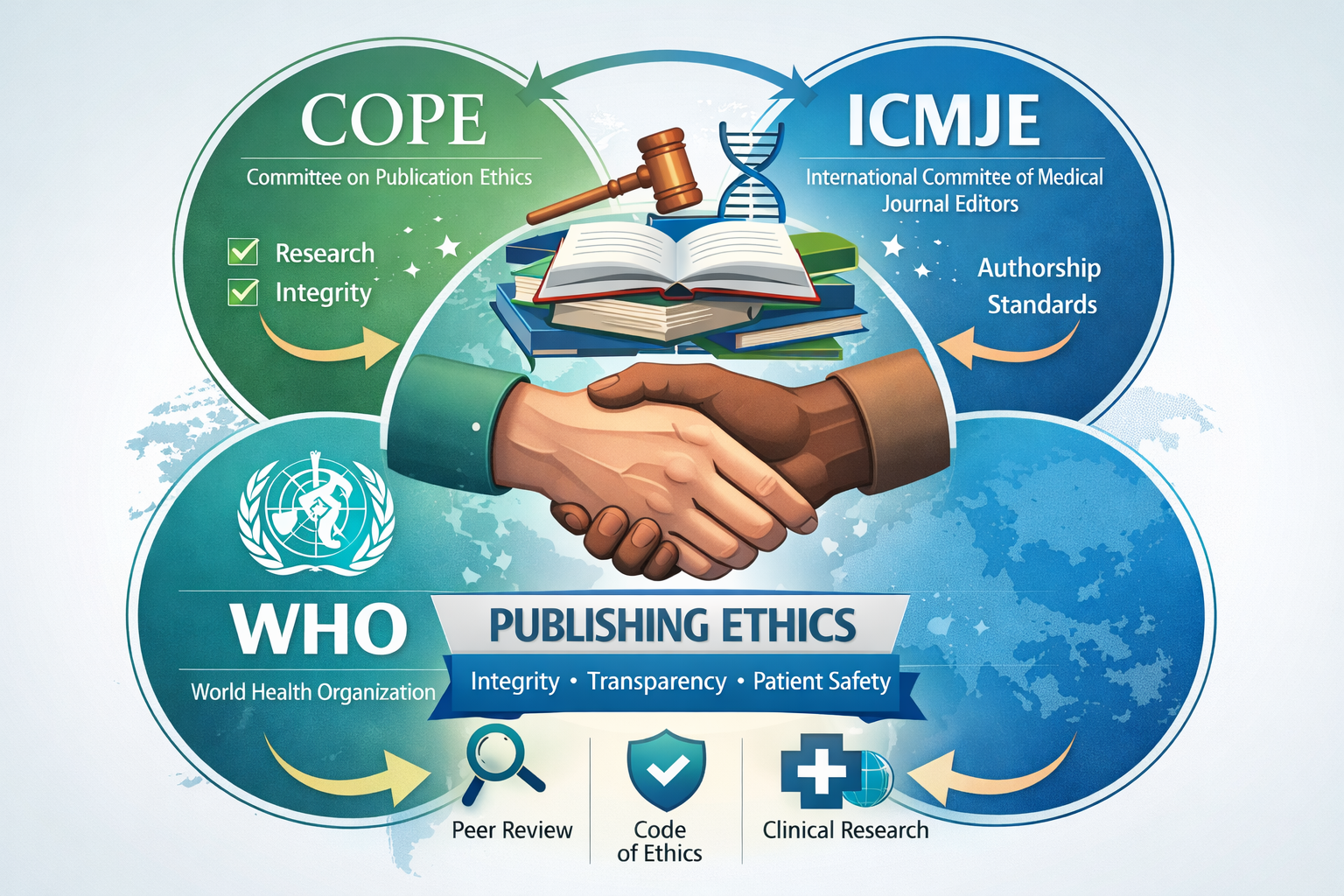
The Committee on Publication Ethics (COPE) emphasizes transparency, authorship clarity, and conflict-of-interest disclosure.
5. Relevance to Journal Scope
Even a strong paper gets rejected if it doesn’t fit the editorial priorities.
For a deeper understanding of journal targeting, a guide on choosing the right medical journal is essential reading.
Why Early-Career Researchers Should Prioritize Portfolios
If you’re early in your research career, chasing one “perfect” paper is not ambition—it’s inefficiency.
Here’s why:
- You delay the publishing experience
- You increase pressure on a single outcome
- You miss iterative learning opportunities
A portfolio-first approach allows you to:
- Build confidence through smaller wins
- Understand peer-review dynamics
- Improve writing and methodological clarity
- Develop relationships with journals
This is especially relevant for contributors aiming for platforms like the Medical Science Educator Journal, where educational research thrives on continuous contribution rather than isolated breakthroughs.
If you’re starting, this guide on writing a medical research paper will help you structure early submissions effectively.
Read Top 10 Medical Journals for Early Researchers with the Highest Acceptance Rates.
The Psychology of Editors: What They Don’t Say Explicitly
Editors rarely state this openly, but their decisions reflect it:
They are risk managers.
Every accepted paper represents:
- Journal reputation
- Citation potential
- Scientific credibility
A researcher with a portfolio reduces perceived risk because:
- Their methodology is predictable
- Their writing quality is consistent
- Their academic behavior is observable
A single-paper author, no matter how talented, introduces uncertainty.
And in high-stakes publishing, uncertainty is often rejected.
Strategic Hybrid Approach: The Only Smart Move
This is where most high-performing researchers separate themselves.
They don’t choose between a portfolio and a single paper—they sequence them strategically.
Phase 1: Build Volume
Start with:
- Case reports
- Clinical audits
- Narrative reviews
Focus: learning, not perfection.
Phase 2: Build Direction
Identify a niche:
- Cardiology outcomes
- Surgical techniques
- Medical education
Publish consistently within that space.
Phase 3: Build Impact
Now produce:
- Large-scale studies
- Multi-center research
- High-quality systematic reviews
At this stage, your “single paper” becomes powerful because it is supported by a visible research trajectory.
For structuring this journey, refer to building a research portfolio strategy.
Where Most Researchers Fail (Brutally Honest Section)
Let’s strip away the illusions.
- Waiting for the Perfect Study
Perfection delays exposure to peer review—the real teacher.
- Publishing Without Direction
Random topics create a fragmented academic identity.
- Ignoring Writing Quality
Even strong data fails with poor presentation.
- Chasing Impact Factor Blindly
Yes, the British Medical Journal impact factor is high—but publishing in the wrong journal wastes time and effort.
- Underestimating Rejection
Rejection is not failure—it’s data. A portfolio allows you to use that data repeatedly.
A single paper is a moment.
A portfolio is momentum.
Momentum wins.
How to Start Building a Strong Research Portfolio Today
No theory—just actionable direction.
Step 1: Start Small but Publish
Don’t wait for groundbreaking ideas. Start with:
- Case reports
- Retrospective analyses
Step 2: Choose a Core Theme
Stick to one general area to build identity.
Step 3: Learn Journal Formatting Early
Formatting errors alone cause avoidable rejections.
Read How to Document Surgical Techniques for Journal Submission.
Step 4: Collaborate Strategically
Work with mentors or peers who publish consistently.
Step 5: Track Your Progress
Maintain a record of:
- Submissions (Explore Manuscript Submission to Publication Process)
- Revisions
- Reviewer feedback
This transforms rejection into a learning system.
If you want to refine your submission process, an article on clinical publication workflows provides clarity.
The Long-Term Career Impact
A single accepted paper can boost your CV.
A strong research portfolio can define your career.
Over time, a portfolio:
- Improves grant opportunities
- Increases collaboration offers
- Enhances academic promotions
- Builds recognition within a niche
It also creates something intangible but critical: editorial familiarity.
When editors recognize your name positively, your future submissions start from a position of trust—not skepticism.
The Editorial Verdict: What Actually Matters More?
Let’s end the debate clearly:
A research portfolio matters more than a single paper for medical journal acceptance.
Not because single papers are irrelevant—but because they are incomplete on their own.
A portfolio:
- Demonstrates reliability
- Reduces editorial risk
- Signals long-term contribution
A single paper may open the door.
A portfolio ensures you’re invited back.
Final Takeaway
If you’re serious about publishing in competitive medical journals, stop thinking in isolated wins.
Think like a system.
Build:
- Consistency
- Direction
- Integrity
Because modern academic publishing doesn’t reward occasional brilliance—it rewards sustained intellectual contribution.
And that only comes from a well-built research portfolio.