
Academic publishing is not a meritocracy—it’s a matching system. The strength of your research matters, but where you submit it often matters more. A perfectly designed study can get desk-rejected in 48 hours simply because it landed in the wrong journal.
That’s the reality most researchers underestimate.
Today, AI tools for journal selection are reshaping this process. They’re not just convenience tools—they’re decision engines that analyze fit, credibility, indexing, and acceptance probability at a level no manual method can match.
If you’re still relying on instinct, you’re operating at a disadvantage.
The Hidden Cost of Choosing the Wrong Journal
Journal selection errors don’t just delay publication—they compound damage over time.
Here’s what typically happens:
- You submit to a high-impact journal without scope alignment
- You get desk rejected within days or weeks
- You reformat the manuscript for another journal
- You repeat the cycle 2–3 times
That’s 6–12 months lost—without any scientific improvement.
According to the National Institutes of Health, aligning manuscript scope with journal aims is one of the strongest predictors of acceptance success. Yet this step is still treated casually by many researchers.
The question of how to select the best journal for publication is no longer trivial—it’s strategic.
What AI Tools for Journal Selection Actually Analyze
AI doesn’t rely on superficial keyword matching anymore. Modern systems use deep semantic analysis to understand your manuscript.
Here’s what they process:
- Abstract meaning and intent (not just keywords)
- Methodology classification (RCT, cohort, meta-analysis, etc.)
- Citation networks (where your references are published)
- Topic clustering across indexed journals
- Language tone and academic structure
This allows AI to compare your manuscript against thousands of journals simultaneously.
Advanced systems also integrate AI search engine optimization tools to evaluate discoverability—because publishing isn’t just about acceptance anymore, it’s about visibility and citation potential.
Why Traditional Journal Selection Methods Are Failing
Most researchers still depend on:
- Supervisor recommendations
- Previously cited journals
- Impact factor rankings
- Word-of-mouth suggestions
These methods are outdated because publishing has changed:
- Journals are more specialized
- Editorial filtering is stricter
- Submission volumes are higher than ever
Even experienced researchers misjudge scope alignment.
This is where AI search monitoring tools outperform human judgment. They operate on real-time data, not assumptions.
How AI Aligns with Scopus Journal Selection Criteria
If your goal is credibility, visibility, and academic recognition, targeting indexed journals is essential. This is where Scopus journal selection criteria become critical.
These criteria include:
- Peer-review quality
- Editorial board reputation
- Consistency of publication
- Ethical publishing practices
- Academic contribution
You can review the full framework through Elsevier’s Scopus content selection policy.
AI tools automatically evaluate journals against these criteria, filtering out:
- Predatory journals
- Low-quality or inactive journals
- Non-indexed publications
This ensures your submission targets journals that actually matter.
What Are the Best AI Search Monitoring Tools?
The phrase what are the best AI search monitoring tools isn’t about brand names—it’s about capabilities.
A high-quality AI tool should provide:
- Semantic manuscript matching
- Acceptance probability scoring
- Indexing verification (Scopus, PubMed, etc.)
- Impact factor and quartile ranking
- Open-access classification
- Submission requirement analysis
Some platforms also integrate insights from AI creative tools, news, tracking shifts in editorial trends, and emerging journals.
Here’s a comparison:
| Capability | Basic Tools | Advanced AI Tools |
| Keyword matching | Yes | Yes |
| Semantic analysis | No | Yes |
| Acceptance prediction | No | Yes |
| Indexing validation | Limited | Full |
| Journal scope matching | Basic | Advanced |
| Open-access filtering | Partial | Precise |
| Editorial trend tracking | No | Yes |
If your tool lacks predictive insights, it’s not truly AI-driven—it’s just a filter.
Why Use AI Search Monitoring Tools in Medical Publishing
Still questioning why AI search monitoring tools?
Because the publishing environment has become too complex for manual navigation.
AI tools help you:
- Identify journals with a higher acceptance probability
- Avoid predatory or low-impact journals
- Reduce submission cycles significantly
- Match formatting and submission requirements instantly
- Discover niche journals aligned with your topic
They also reveal opportunities you would never find manually—especially in interdisciplinary research.
For ethical considerations in publishing, refer to COPE’s official guidelines, which emphasize transparency and journal integrity—factors AI tools increasingly incorporate.
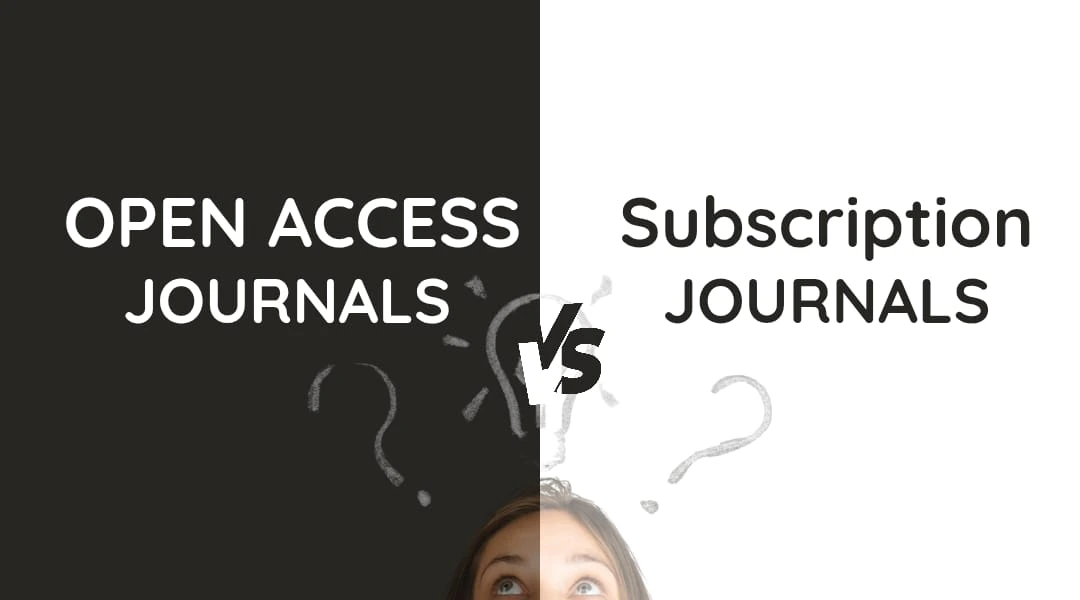
Open Access Complexity: Not All Journals Are Equal
The rise of the gold, fully open-access, highly selective journal has added another layer of complexity.
Open access used to mean:
- Easier acceptance
- Lower editorial standards
That’s no longer true.
Today, many open-access journals are:
- Highly selective
- Rigorously peer-reviewed
- Indexed in major databases
At the same time, predatory journals have also increased.
According to Nature, the expansion of open-access publishing has created both opportunity and risk due to quality variation.
AI tools differentiate between:
- Legitimate high-impact open-access journals
- Mid-tier journals with faster review cycles
- Predatory journals with misleading metrics
This filtering is critical for protecting your research credibility.
Case Shift: From Trial-and-Error to Data-Driven Submission
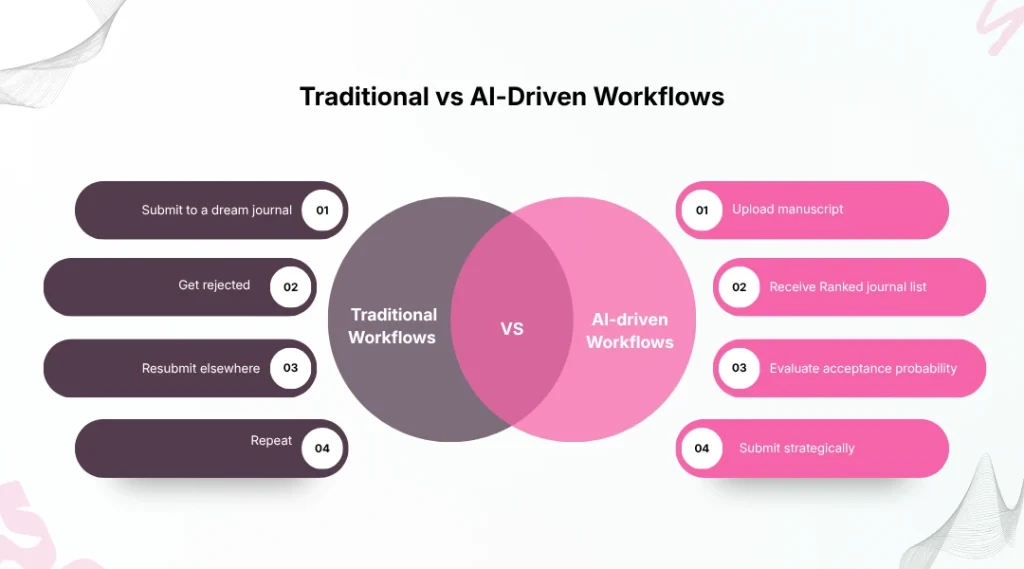
This shift reduces wasted time and increases efficiency.
Even curated lists like the selected journals of emma m lion—once referenced in niche academic circles—are now obsolete. Static lists cannot compete with real-time AI analysis.
Internal Strategy: Smarter Publishing with ClinicaPress
At ClinicaPress, the focus is on publication, with full support.
To support researchers in their publication journey, the platform offers structured guidance through its blogs.
Some of its prominent support guides are:
- Manuscript Submission to Publication Process
- How to Choose Between Medical, Surgical, and Health Science Journals
- Factors Influencing Desk Rejection in Clinical and Surgical Journals
These resources address real bottlenecks—not only theoretical advice.
The Role of AI in Research Visibility and Impact
Publishing is no longer the end goal—visibility is.
AI tools integrate AI search engine optimization tools to optimize:
- Keyword alignment
- Title structure
- Abstract readability
- Citation potential
This increases:
- Discoverability in search engines
- Citation rates
- Academic impact
The integration of AI into research workflows reflects broader developments in AI in healthcare, where decision-support systems are becoming standard.
Journal selection is simply part of this transformation.
Ethical Boundaries: AI Is a Tool, Not a Shortcut
AI should guide decisions—not manipulate outcomes.
Researchers must still ensure:
- Honest representation of findings
- Ethical submission practices
- Transparency in authorship and data
AI tools should never be used to:
- Target journals with weak review processes intentionally
- Misrepresent manuscript scope
- Game editorial systems
Responsible use aligns with global publishing standards.
Future Outlook: Predictive Publishing Intelligence
The next generation of AI tools for journal selection will go beyond matching.
Expect:
- Reviewer compatibility prediction
- Editorial decision forecasting
- Real-time policy updates
- Dynamic journal ranking based on acceptance trends
This will transform publishing into a fully data-driven system.
Researchers who adapt early will have a clear advantage.
Final Insight: Journal Selection Is Now a Data Problem
The era of guesswork is over.
The question is no longer how to select the best journal for publication—it’s whether you’re using systems designed for modern publishing complexity.
Because today:
- Fit determines acceptance
- Speed determines relevance
- Data determines success
And AI is the only tool capable of handling all three simultaneously.
Research with these tools, and you will see the results. ClinicaPress holds a key position in the journal publication environment.
Try publishing your surgical journals in our Journal of Surgical and Procedural Research, while clinical and translational research in our Journal of Clinical Medicine & Translational Research.