
Epidemiological studies are the backbone of modern public health and clinical decision-making. Yet many researchers—especially early-career authors—struggle with one core question: where and how should these studies be published to maximize impact, credibility, and ethical integrity?
This is not just a technical problem. It’s a strategic one. Publishing epidemiological studies demands a clear understanding of study design, journal fit, reporting standards, and editorial expectations. Get it wrong, and even strong data can be rejected. Get it right, and your work shapes policy, clinical practice, and global health narratives.
What Are Epidemiological Studies?
At its core, the definition of an epidemiological study refers to the systematic investigation of the distribution and determinants of health-related states in populations.
Organizations like the World Health Organization emphasize that epidemiology is not just about disease tracking—it’s about actionable evidence that informs interventions.
There are several major epidemiological study designs, including:
- Cohort studies
- Case-control studies
- Cross-sectional studies
- Randomized controlled trials (within clinical epidemiology frameworks)
Each design sits on a different level of the evidence hierarchy. Cohort studies, for example, are powerful for causal inference, while cross-sectional studies are faster but limited in temporality.
If you’re still choosing your design, this guide on structuring research for journals can sharpen your direction: Regional vs International Journals in Clinical Practice — Impact on Clinical Decisions.
Why Publishing Epidemiological Studies Is Different
Epidemiological research is inherently messy. You are dealing with populations, confounders, biases, and real-world variability—not controlled lab conditions.
That’s exactly why journals are stricter.
Editors are not just asking: Is this study interesting?
They are asking: Is this study reliable enough to influence policy or practice?
Key expectations include:
- Methodological transparency
- Justified sampling strategies
- Robust statistical handling of confounders
- Ethical clarity in population-based research
For instance, studies using the Center for epidemiologic studies depression scale must justify cultural adaptation, validation, and scoring interpretation. A scale validated in one population cannot be blindly applied to another.
This is where many submissions fail—not because the data is wrong, but because the reasoning is weak.
Where to Publish Epidemiological Studies
Choosing the right journal is not optional—it determines whether your paper gets reviewed or rejected within days.
1. Public Health Journals
These journals prioritize population-level impact and methodological strength.
Examples include:
- American Journal of Epidemiology
- International Journal of Epidemiology
- BMC Public Health
They expect:
- Large or representative samples
- Policy relevance
- Strong statistical modeling
If your study answers a population-level question, this is your lane.
To refine journal targeting, explore: How to Choose Between Medical, Surgical, and Health Science Journals?
2. Clinical Journals?
If your work aligns with Clinical Epidemiology: A Basic Science for Clinical Medicine, then clinical journals are more appropriate.
Top options include:
- The Lancet
- JAMA
- BMJ
These journals prioritize translational impact—your findings must directly inform clinical decisions.
The Centers for Disease Control and Prevention frequently produces epidemiological evidence that feeds into these platforms, especially during outbreaks and large-scale health crises.
3. Specialty Journals
When your study is highly focused—say, psychiatric epidemiology or cancer epidemiology—specialty journals offer better acceptance odds.
Examples:
- Journal of Affective Disorders
- Epidemiology and Psychiatric Sciences
These journals expect depth, not breadth. They value nuanced discussions and domain-specific rigor.
4. Open Access Platforms
Open-access journals provide visibility and faster dissemination.
Examples include:
- PLOS ONE
- BMC series journals
But here’s the reality: not all open-access journals are equal.
Before submitting, verify indexing through the Directory of Open Access Journals to avoid predatory publishers.
Matching Study Design to Journal Expectations
A critical but often ignored step is aligning your epidemiological study designs with the journal’s editorial scope.
| Study Design | Best Journal Type | Editorial Expectation |
| Cross-sectional | Public health / open access | Descriptive insights, large samples |
| Cohort | High-impact journals | Strong causality and follow-up data |
| Case-control | Specialty journals | Clear exposure-outcome relationships |
| RCT (clinical epi) | Clinical journals | Direct clinical applicability |
Submitting a weak cross-sectional study to a top-tier clinical journal is a strategic mistake—not a quality issue.
How to Structure Your Manuscript for Publication

Even strong epidemiological data can collapse under poor structure.
Title and Abstract
Your title must clearly state:
- Study design
- Population
- Key variable
Example:
“Screen Time and Depression Among University Students: A Cross-Sectional Study”
This instantly signals an example of an epidemiological study.
Methods Section (Your Make-or-Break Section)
Most epidemiological manuscripts are rejected here.
You must clearly define:
- Study setting and population
- Inclusion/exclusion criteria
- Sampling strategy
- Measurement tools (e.g., validated scales)
- Statistical methods
Ambiguity is unacceptable.
Results Section
Keep it clean and data-driven.
Use:
- Tables for baseline characteristics
- Graphs for trends
- Confidence intervals for reliability
Do not interpret results here—that belongs in the discussion.
Also read How to Structure a Research Paper (IMRaD Format Explained)?
Visualizing Epidemiological Data (Why It Matters)
Data visualization is not cosmetic—it’s persuasive.
A well-placed figure can:
- Clarify trends instantly
- Highlight associations
- Improve reviewer engagement
Strong visuals are often the difference between a readable paper and a forgettable one.
Writing a High-Impact Discussion Section
This is where you move from data to influence.
A strong discussion should:
- Compare findings with existing literature
- Explain discrepancies
- Address limitations honestly
- Suggest real-world implications
Avoid exaggeration. Journals reject overconfident conclusions quickly.
Key Reporting Guidelines You Must Follow
Reporting guidelines are non-negotiable.
The most important for epidemiology is STROBE (Strengthening the Reporting of Observational Studies in Epidemiology).
STROBE ensures:
- Transparent reporting
- Reproducibility
- Standardized structure
Funding bodies like the National Institutes of Health increasingly require adherence to such frameworks.
Ignoring this is a fast track to rejection.
Statistical Pitfalls That Kill Epidemiological Papers
Let’s be blunt—many epidemiological studies fail not in design, but in analysis.
Common issues include:
- Ignoring confounding variables
- Overfitting regression models
- Misinterpreting p-values
- Lack of sensitivity analysis
Advanced journals expect:
- Multivariate analysis
- Adjustment for confounders
- Clear justification of statistical tests
If your stats are weak, your paper won’t survive peer review—no matter how interesting your topic is.
Common Reasons Epidemiological Studies Get Rejected
Most rejections are predictable.
Top reasons include:
- Poor journal fit
- Weak methodological clarity
- Lack of novelty
- Inadequate statistical analysis
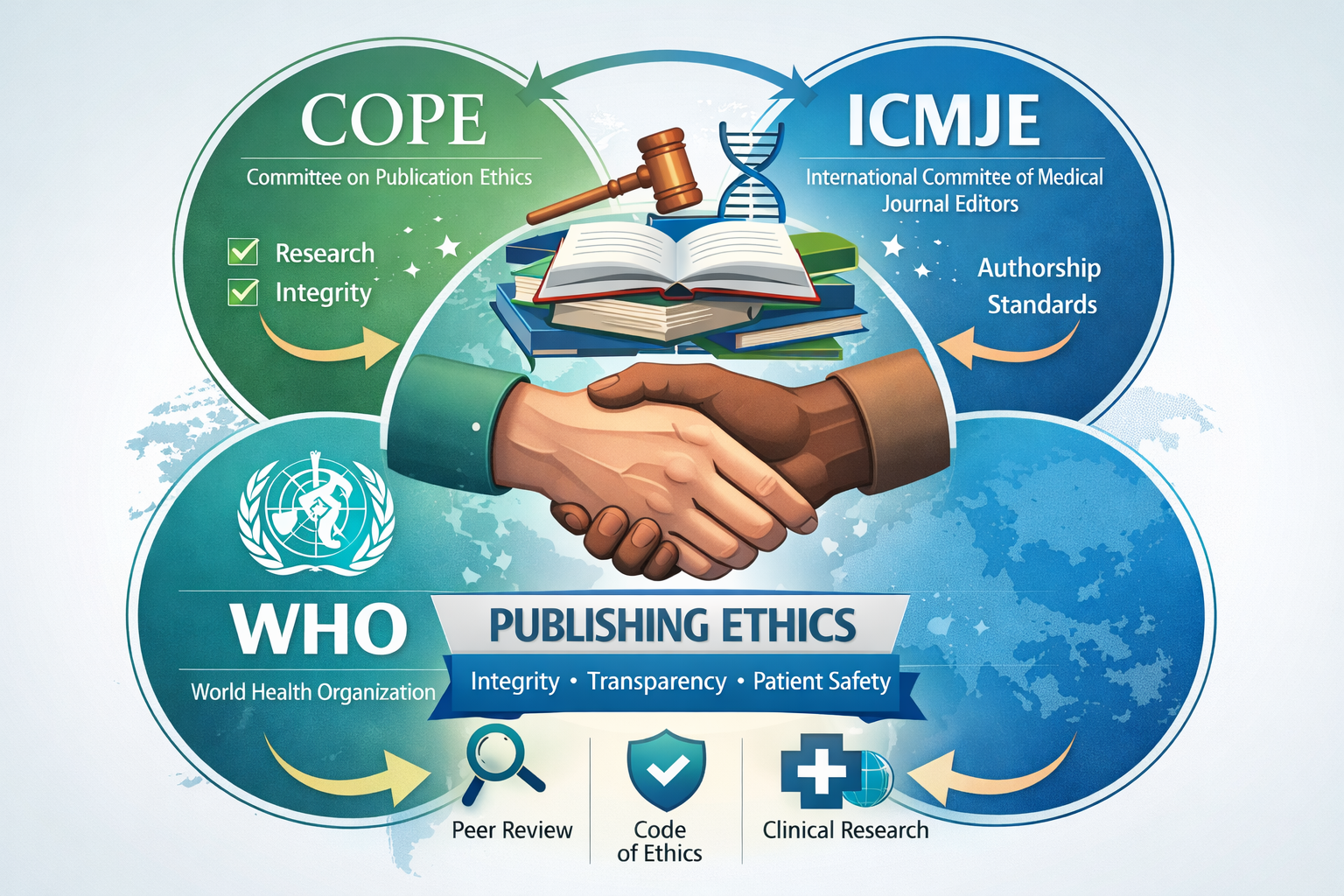
- Ethical concerns (Read Top 10 Ethical Academic Journals That Follow COPE, ICMJE, and WHO Publishing Standards)
A deeper breakdown is available here: How Journals Reject Papers for Poor Presentation and Why It Matters.
Example of an Epidemiological Study (Expanded)
| Component | Example Description |
| Study Type | Cross-sectional study |
| Population | 2,000 university students |
| Exposure Variable | Screen time |
| Outcome Variable | Targeted digital health interventions are needed |
| Key Finding | Higher screen time correlated with increased depression risk |
| Confounders Adjusted | Age, gender, socioeconomic status |
| Implication | Targeted digital health interventions are needed |
This is a clean example of an epidemiological study—focused, structured, and aligned with publication standards.
Ethical Considerations in Publishing
Epidemiological research carries ethical weight because it deals with real populations.
You must ensure:
- Informed consent
- Ethical approval (IRB/ethics committee)
- Data confidentiality
Guidelines from the World Medical Association—especially the Declaration of Helsinki—are standard requirements.
You can explore its principles further on Wikipedia.
Ethical shortcuts are not just risky—they are career-ending.
Final Strategy: Publish Smarter, Not Harder
Publishing epidemiological studies is not about pushing more papers—it’s about precision, positioning, and credibility.
Here’s what actually works:
- Start with a clear, publishable research question
- Choose the right epidemiological study design early
- Match your study to the right journal category
- Follow reporting guidelines strictly
- Prioritize transparency over complexity
Epidemiology is one of the most influential domains in health research. But influence comes with scrutiny.
If your work is methodologically sound, ethically grounded, and strategically positioned, publication is not luck—it’s execution.